Can Nail Guns Use Different Size Nails?
Yes, most nail guns use different size nails within a set range of lengths, but the gauge, head type and collation angle must match the gun. A brad nailer might run 18-gauge brads from 5/8 in to 2 in, while a framing nailer runs thicker nails over a longer range.
On this page (7 sections)
- What does "different size" mean for a nail gun?
- How do you find the nail size range a gun accepts?
- Can you change nail length in the same gun?
- Can you use different gauge nails in the same gun?
- Can you mix nail lengths in one magazine?
- What goes wrong when nails don't match the gun?
- Which nail gun fits your job?
Yes, a nail gun can use different size nails, as long as they fall within its rated length range and match its gauge. A typical 18-gauge brad nailer runs brads from 5/8 in to 2 in, so you can switch lengths for different trim without changing tools.
The question of whether nail guns can use different size nails comes down to three things: gauge, length range and collation.
The gun sets the limits. Gauge is the wire thickness of the nail, length is how deep it reaches, and collation is how the nails are held together in the magazine.
Change any one outside the gun's spec and you get jams, misfires or split wood.
What does "different size" mean for a nail gun?
Nail size means three separate things: gauge, length and head type. Gauge sets the shank thickness, length sets the reach, and the head and collation set how the nail sits in the magazine.
A gun is built for one gauge and a range of lengths.
Gauge runs in reverse: a lower number is a thicker nail. An 18-gauge brad is thin and leaves a small hole, while a 16-gauge finish nail is thicker and holds harder.
A framing nail is thicker still.
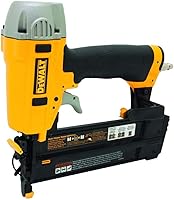
Within its gauge, the gun usually accepts several lengths. The DeWalt DWFP12231 drives 18-gauge brads from 5/8 in to 2 in.
That spread covers shoe molding up to thicker casing.
Head type matters too. Brads have small heads made to sit below the surface.
Finish nails have larger heads, and many framing nails have full round or clipped heads.
Collation is the strip or coil that holds nails together. Angled strips fit angled magazines, and straight strips fit straight ones.
A stick cut at the wrong angle won't feed.
How do you find the nail size range a gun accepts?
Check the gun's label or manual for the gauge and length range. Every nailer states both, and that statement is the limit you work within.
Stay inside it for safe, reliable driving.
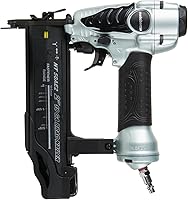
The range usually appears in the model name or the spec table. The Metabo HPT NT50AE2 accepts 18-gauge brads from 5/8 in up to 2 in.
The WEN 20512 cordless model shoots 18-gauge brads from 3/4 in to 2 in.
Length matters more than people expect. A nail much longer than the material is thick can blow through the back.
A nail too short leaves the head proud or barely grips.
The gauge is fixed. You cannot put a thicker 16-gauge nail into an 18-gauge gun.
The magazine channel and driver blade are cut for one shank size.
Some guns also list a maximum material thickness. A brad nailer driving 2 in brads into 3/4 in trim reaches deep, so pick the length to suit the joint, not just the gun's top end.
Can you change nail length in the same gun?
Yes, changing length within the gun's rated range is normal. Empty the magazine, load a full stick of the new length, and adjust the depth of drive if the head now sits proud or sinks too far.
Don't mix lengths in one load.
Depth of drive is the setting that controls how far the driver pushes each head. On the DeWalt kit it's a tool-free adjustment with detents, so you can dial the head flush to the wood surface.
If you switch from thin shoe molding to thicker casing, a longer brad holds better. Set the depth again so the head sits just below the surface without crushing the wood fibers.
Who should pick the Metabo HPT NT50AE2?
The Metabo HPT NT50AE2 is the best all-day finishing choice here, with the top score of 8.9. It weighs 2.2 lb and has a selective actuation switch for bump fire or sequential fire.
Its 360-degree adjustable exhaust keeps dust and oil off the work. A reload indicator warns when nails run low.
It takes 18-gauge brads from 5/8 in to 2 in.
Who should pick the DeWalt DWFP12231?
The DeWalt DWFP12231 suits trim and molding work, scoring 8.8. It drives 18-gauge brads from 5/8 in to 2 in and has tool-free depth adjustment with detents.
Its tool-free jam release makes a stuck nail easy to clear, and the rear exhaust keeps debris away from the work. It comes as a kit with a carrying case.
Who should pick the WEN 20512?
The WEN 20512 is the hose-free pick for small jobs, scoring 7.6. It runs on a 20V battery with a charger included, so there's no compressor or air line.
It fires 18-gauge brads from 3/4 in to 2 in from a 100-nail magazine. Its smart LED tracks battery status and magazine fill.
The included 400 brads get you started.
Can you use different gauge nails in the same gun?
No. Gauge is fixed by the gun and cannot be changed.
An 18-gauge gun only takes 18-gauge nails, a 16-gauge gun only takes 16-gauge, and a framing gun takes its own thick nails.
The magazine and driver are sized for one shank.
People often confuse gauge with length. Gauge is the wire thickness, and it decides which gun you own.
Length is the variable you can change within the gun's range.
A thicker nail needs more driving force. Putting a 16-gauge nail in an 18-gauge gun won't fit the track, and forcing it will jam the driver.
If your work needs thicker nails, move to a finish nailer or framing nailer.
The same rule applies in reverse. An 18-gauge brad in a 16-gauge gun will sit loose and feed at the wrong angle.
Use the gauge printed on the gun.
Can you mix nail lengths in one magazine?
No. Load one length at a time.
Mixed lengths feed unevenly, set heads at different depths, and are a common cause of jams.
Empty the magazine fully and load a matching stick.
Nail strips and coils are built so every nail is the same length. That keeps the driver stroke consistent and the head depth predictable across the run.
If you need two lengths on one job, finish the first run, unload the gun and reload. It takes less time than clearing a jam from a mixed load.
Mixing brands inside one stick is the same problem. Collation angles and glue patterns differ, so the stick may not seat in the magazine.
Match gauge, length and collation, then brand matters less.
What goes wrong when nails don't match the gun?
Wrong nails cause jams, misfires and split material. A nail that's too long can punch through thin stock, and one that's too short won't hold the joint.
A mismatched collation won't feed at all.
A jam is the most common result. The driver stalls against a nail that's sitting at the wrong angle.
If you hit one, stop, release the trigger and follow safe steps to clear a jammed nail gun before reloading.
Split trim is the other risk. Long brads driven close to the edge of thin molding can split the wood.
Pick a length that reaches about two-thirds into the piece you're fastening to.
Misfires happen when the gun doesn't seat a nail fully. The next shot can double-fire or leave a head proud.
Check the length range and depth setting before blaming the tool.
Which nail gun fits your job?
Match the gun to the nail size you need before you buy. An 18-gauge brad nailer covers trim and light finishing.
A 16-gauge finish nailer or framing nailer covers thicker stock and outdoor builds.
Our guide to what nail gun you need walks through the choices by project.
For decking and fencing, the nail size gets bigger and the range changes. Our post on what size nail gun for fencing covers the thicker nails those jobs call for.
If you want to skip the compressor, compare cordless nail guns for battery-powered options. They still follow the same gauge and length rules.
For trim and finishing work, the Metabo HPT NT50AE2 is the best all-day pick, with the DeWalt DWFP12231 close behind for kit convenience and the WEN 20512 the hose-free option for small jobs. Pick the gun first, then buy nails inside its stated range.
That order keeps you out of jams and gets the head set right.
Frequently asked questions
Can I put longer nails in a brad nailer than the manual lists?
No, stay within the length range the gun is built for. A longer nail can jam the magazine, feed at the wrong angle, or drive too far and split thin trim.
Check the gun's stated range and buy nails that sit inside it.
Can I use 16-gauge nails in an 18-gauge nail gun?
No, gauge must match the gun. An 18-gauge brad is thinner than a 16-gauge finish nail, so it won't seat in the magazine and the driver won't fit the head.
Use only the gauge your gun lists.
Do all nails for one gun need to be the same brand?
No, but they need the same gauge, length range, head type and collation. A different brand is fine when those match.
Mixing brands or collation angles inside one load is where feeding problems start.
What happens if I use the wrong size nails in a nail gun?
The gun can jam, misfire or fail to drive the head flush. Nails that are too long may punch through thin material, and nails that are too short may not hold.
Clear any jam carefully before reloading.
Can a framing nailer use different size nails?
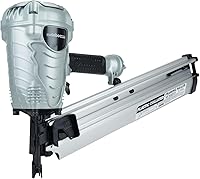
Yes, within its rated length range. A framing nailer typically runs thick nails over a longer spread than a brad nailer, but the shank diameter and collation must match the gun.
Check the magazine for the approved range.
Can I mix nail lengths in the same magazine?
Don't. Mixed lengths feed unevenly and can jam the gun or set heads at different depths.
Empty the magazine, load one length at a time, and change the whole stick when you switch.