What Size Nail Gun for Fencing Do You Need?
For most wood fencing, choose a framing nailer that accepts nails long enough to pass through the fence board and bite into the rail. Check your fence plans and the nailer’s approved fasteners before choosing a nail length.
On this page (7 sections)
- What size nail gun do you need for fencing?
- How do you choose the right nail length?
- Which framing nailer features matter for a fence?
- Can you use a finish nailer for a fence?
- Is a cordless nail gun suitable for fencing?
- How should you use a nail gun on a fence safely?
- How do you pick a nail gun size for your fence?
For most wood fencing, choose a framing nailer that accepts nails long enough to pass through the fence board and bite into the rail. Check your fence plans and the nailer’s approved fasteners before choosing a nail length.
The right tool depends on the fence joint, not just the board. A framing nailer is built for larger construction fasteners, while finish and brad nailers are intended for smaller trim work.
What size nail gun do you need for fencing?
A framing nailer is usually the right nail gun for fastening fence boards to rails. Its longer nails suit structural wood joints better than the short fasteners used by finish nailers.
Size means two things here: the nailer’s type and the fastener length it can accept. Check both against your fence plan before buying or loading a tool.
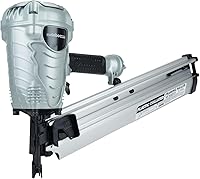
The Metabo HPT NR90AES1 accepts plastic-collated framing nails from 2 in to 3 1/2 in. That range gives you choices for different wood assemblies.
You still need to select a length that fits your actual board and rail thickness.
To compare tool styles, see types of nail guns for home projects. For tool-specific setup and technique, follow how to use a framing nailer on decks, fences, and sheds.
How do you choose the right nail length?
Choose a nail that passes through the fence board and enters the rail far enough for the joint in your fence plan. The required length depends on the thickness of both pieces and the fastening guidance for your materials.
Measure the picket or board and rail where they meet. Don’t choose a nail based on the board alone, and don’t assume the longest nail a tool accepts is the best choice.
A nail that is too short may not hold the joint as intended. One that is too long can protrude or create a hazard, so check the plan and nail-maker guidance before loading the magazine.
Does a fence picket’s thickness set the nail size?
Picket thickness is only one part of the decision. The nail must pass through that board and enter the rail, so the rail and joint design matter too.
If you’re replacing a board, inspect the existing fastener and the fence condition. For a new build, use the fence plan’s fastener recommendations instead of copying a size from an unrelated fence.
Which framing nailer features matter for a fence?
Look for a tool that accepts the nail length and collation your fence plan calls for. Nail angle and collation must match the tool’s magazine, so check those details along with the length range.
The Metabo HPT NR90AES1 is a 21-degree plastic-collated framing nailer with tool-less depth adjustment and a switch for sequential or contact nailing. It weighs 7.5 lb, which may matter if you’ll carry it around a large fence project.
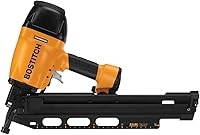
The Bostitch F21PL drives plastic-collated framing nails and also supports metal connector applications with a separate nosepiece. Its push-button depth guide lets you adjust nail depth, and its adjustable rafter hook can hang on a joist or rafter during a break.
Check that the nailer’s permitted fasteners fit your plan before use. Framing nails, metal connector nails, and their collation are not interchangeable just because they fit a similar-looking tool.
For more on nailer types and what each is built to do, read nail gun basics. If the job also includes finish trim, our guide to finish nailers for trim work covers that separate use.
Can you use a finish nailer for a fence?
A finish nailer is usually not the right choice for the main fence joints. Finish nailers drive smaller fasteners for molding, casing, and similar trim, so use one only if the project plan specifically calls for a compatible fastener.
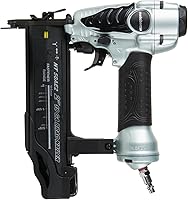
The Metabo HPT NT65MA4 accepts 15-gauge angled DA nails from 1 1/4 in to 2 1/2 in. It’s designed for crown and base molding, casings, cabinets, exterior trim, and staircases, which makes it a fit for suitable trim details rather than a substitute for a framing nailer.
A fence may have decorative trim that suits a finish nailer, but the pickets and rails still need fasteners selected for their structural joint. Keep the two tasks separate and follow the plan for each.
Is a cordless nail gun suitable for fencing?
A cordless framing nailer can work well for fencing if it accepts the required nail type, angle, and length. That can simplify moving around a yard because there’s no air hose to drag across the work area.
Check the manufacturer’s instructions for the exact fasteners the tool accepts. A cordless model may not use the same nail collation as a pneumatic model, even if their nail lengths overlap.
Compare tool types and power options in framing nail guns. If you’re new to nailers, start with nail gun safety tips for home projects.
How should you use a nail gun on a fence safely?
Use a nail gun only after reading its manual and wearing eye protection. Keep your hands clear of the firing area, point the tool away from yourself and others, and disconnect its power source before clearing a jam or making adjustments.
Hold the tool firmly against the workpiece as its instructions direct. Keep the board stable, watch for people on the other side of the fence, and stop if the tool misfires or a nail bends.
Never bypass a safety feature to speed up repetitive work. Review nail gun safety tips before starting, especially if you haven’t used a framing nailer before.
How do you pick a nail gun size for your fence?
For most fence board-to-rail joints, pick a framing nailer whose approved nail range matches your plan. Confirm the nail length, angle, and collation before choosing a tool.
The Metabo HPT NR90AES1 accepts 2 in to 3 1/2 in plastic-collated framing nails. The Bostitch F21PL adds a metal connector application with its quick-change nosepieces.
Choose a finish nailer such as the NT65MA4 only for compatible trim details.
Measure the actual wood, follow your fence plan, and keep the tool’s manual nearby. For more help choosing a model, browse framing nail guns and how to use a framing nailer.
Frequently asked questions
What size nail gun is best for fencing?
A framing nailer is the usual choice for attaching fence boards to rails because it accepts longer nails than trim nailers. Match the nail length to the combined board and rail thickness, then confirm that the nail type and length suit your fence design and the tool.
What length nails should I use for fence pickets?
Choose a nail long enough to pass through the picket and enter the rail securely, using the fence plan or fastener guidance for the materials. Avoid guessing from the picket alone, since rail thickness, wood type, and the joint design affect the right length.
Can I use a finish nailer for fencing?
A finish nailer is generally meant for trim and molding, not the main joints in a fence. Its shorter, thinner nails may not provide the fastening your fence design requires.
Use a framing nailer when its approved nails match the plan.
Is a cordless nail gun good for fencing?
A cordless framing nailer can be convenient when you don't want to manage an air hose and compressor. Check that it accepts the nail angle, collation, and lengths required for your fence, and compare options in our guide to framing nail guns.