What Nail Gun Do I Need for My Project?
Choose a nail gun by the material and joint: use a brad nailer for light trim and small pieces, a finish nailer for sturdier trim and molding, and a framing nailer for structural lumber. Match the nail length and gauge to the work.
On this page (8 sections)
- What nail gun do I need for my project?
- When should you use a brad nailer?
- When does a finish nailer fit better?
- When do you need a framing nailer?
- Should you choose a pneumatic or cordless nail gun?
- How do you choose the right nail length and gauge?
- What should you check before starting?
- Which nail gun should you choose?
The nail gun you need depends on what you're fastening and how strong the joint must be. Use an 18-gauge brad nailer for light trim and small pieces, a 16-gauge finish nailer for sturdier molding and cabinetry, and a framing nailer for structural lumber.
Start by matching the fastener to the material, then decide whether a pneumatic or cordless tool better fits your workspace. If you're still learning the tool types, see our plain guide to types of nail guns.
What nail gun do I need for my project?
Choose the nailer whose fastener size and intended work match your project. A smaller gauge number generally means a thicker nail, but the right choice also depends on the material, nail length and how visible you want the hole to be.
| Project | Nailer to consider | Why it fits |
|---|---|---|
| Attaching small trim or a decorative strip | 18-gauge brad nailer | Slim brads leave smaller holes than many finish nails |
| Installing molding, chair rail or cabinetry | 16-gauge finish nailer | Thicker finish nails suit sturdier finish work |
| Joining framing lumber or sheathing | Framing nailer | Made for larger framing nails and construction tasks |
| Holding delicate, very small trim | Pin nailer | Tiny fasteners can leave minimal holes, but may not provide enough holding strength alone |
| Assembling thin wood pieces | Stapler or brad nailer | Choose based on the material and the joint's strength needs |
This table is a starting point, not a substitute for the project plan. Check the wood thickness and the fastener guidance for your material so the nail does not pass through or split the workpiece.
For a broader explanation of nailer styles and common jobs, read our guide to nail gun types.
When should you use a brad nailer?
Use a brad nailer for light trim, small molding and furniture work where a narrow nail can hold pieces while leaving a modest hole. An 18-gauge brad nailer is often a practical choice for finish work that does not need a thicker nail.
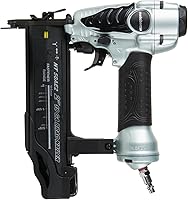
The Metabo HPT NT50AE2 takes 18-gauge brads from 5/8 to 2 in and has tool-less depth adjustment. It's pneumatic, so plan for a compressor and hose.
The cordless DeWalt DCN680B also drives 18-gauge brads, from 5/8 to 2-1/8 in. Its battery-powered design avoids a compressor and hose, which can be useful when you need to move around a room.
Brad nailers are not the default for structural joints or heavy framing. Learn more about their common jobs in what a brad nailer is used for, or compare options in our brad nailer picks.
When does a finish nailer fit better?
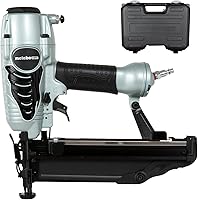
Choose a finish nailer when trim or molding needs a thicker fastener than a brad nailer provides. The Metabo HPT NT65M2S is a 16-gauge pneumatic nailer for molding, chair rail, cabinetry and other fine finish work.
It accepts 16-gauge finish nails from 1 to 2-1/2 in. Its depth adjustment is tool-free, and the adjustable exhaust directs air away from the user.
Use the nail length that suits the material and joint. If the nail is too long, it can break through the back; if it is too short, it may not hold securely.
A finish nailer is not a framing tool. For a closer comparison of the two, see finish nailer vs framing nailer and our trim nailer guide.
When do you need a framing nailer?
Use a framing nailer for framing lumber and construction tasks such as subflooring, roof decking, wall sheathing and truss work. These jobs need larger fasteners than finish nailers are designed to drive.
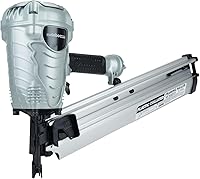
The Metabo HPT NR90AES1 is a 21-degree pneumatic framing nailer that accepts plastic-collated nails from 2 to 3-1/2 in. It has tool-less depth adjustment and a switch between sequential and contact nailing.
Check the construction plan for nail size, spacing and fastening pattern before starting. A framing nailer is powerful and needs careful handling, even on a small home project.
For task-specific guidance, see how to use a framing nailer and our framing nail gun guide.
Should you choose a pneumatic or cordless nail gun?
Choose a pneumatic nailer if you already have a compatible compressor and hose, or if the tool's fastener type fits the job. Choose cordless when avoiding the compressor and hose matters more than keeping the tool setup simple.
The Metabo HPT brad, finish and framing nailers in this guide are pneumatic. The DeWalt DCN680B is battery-powered and does not use a compressor or hose.
Check what's included before you buy a cordless tool. The DCN680B is sold as a tool only, so confirm you have a compatible battery and charger or include them in your plan.
How do you choose the right nail length and gauge?
Pick the gauge and length specified for the joint, then confirm the nailer accepts that fastener. Gauge describes nail thickness, while length determines how far it travels through the first piece and into the material behind it.
An 18-gauge brad is slimmer than a 16-gauge finish nail. Use the thinner brad when its holding strength fits the work and you want a smaller hole; consider a finish nail for sturdier trim where a thicker fastener is appropriate.
Measure the combined thickness of the pieces and follow project or material guidance. Avoid choosing a nail by length alone, because a long nail can emerge through the far side or hit something hidden behind the work.
What should you check before starting?
Before using a nail gun, read the manual and wear eye protection. Keep hands clear of the firing path, disconnect the air supply or battery before clearing a jam, and use the tool's safety features as directed.
Confirm that the nail type and length match the tool. Keep the workpiece stable, check for hidden wires or pipes before fastening into walls, and point the tool away from yourself and others.
For a full checklist, read our nail gun safety tips.
Which nail gun should you choose?
Choose an 18-gauge brad nailer for light trim, a 16-gauge finish nailer for sturdier molding and cabinetry, or a framing nailer for lumber and sheathing. Pick pneumatic if you have the compressor setup, or cordless if you want to work without a hose.
If you're starting with general home projects, compare the uses in our best nail guns for DIY projects guide, then match the fastener to your specific job.
Frequently asked questions
What nail gun do I need for trim?
For light trim and small molding, start with an 18-gauge brad nailer. A 16-gauge finish nailer suits sturdier trim, chair rail and cabinetry where a thicker nail is useful.
Check the material thickness and the fastener length the project calls for before choosing.
Can one nail gun handle every home project?
No single nail gun is suited to every material and joint. Brad and finish nailers handle different kinds of finish work, while a framing nailer is built for larger framing fasteners.
Choose by the job, then confirm the nail type and length fit both the material and tool.
Do I need a compressor for a nail gun?
Pneumatic nailers need an air compressor and hose, so factor in those items and a nearby power source. Cordless battery models avoid the compressor and hose, but check whether the tool comes with a battery and charger before buying.
What nail gun should I use for framing?
Use a framing nailer for framing lumber, subflooring, roof decking and similar construction work. Check the required nail length and collation angle for your project, since framing nailers accept specific fasteners.
Wear eye protection and follow the tool manual and site safety rules.