Can I Use a Brad Nailer for Roofing?
No, you can't use a brad nailer for roofing. A brad nailer drives small finish nails up to about 2 inches and doesn't have the power, nail size or holding strength for roof decking, sheathing or shingles. Roof work calls for a framing nailer or a dedicated roofing nailer.
On this page (8 sections)
- What is a brad nailer actually built for?
- Why can't a brad nailer handle roofing?
- What should you use instead for roof decking?
- Which framing nailer suits roof decking?
- Where does a brad nailer still earn its place on a roof job?
- Does nail angle matter for roof fasteners?
- How do you keep the right tool running on a roof?
- The short version
No, a brad nailer won't work for roofing. Its small finish nails are too short and too thin to hold roof decking, sheathing or shingles, and it doesn't have the driving power for the job.
If you're asking can I use a brad nailer for roofing, the answer is a clear no: roof work calls for a framing nailer or a dedicated roofing nailer.
A brad nailer is a trim tool. It shoots 18-gauge brads into baseboard, casing and light paneling, where a small head and a shallow hold are fine.
Roofs are structural, and that changes the tool you need.
What is a brad nailer actually built for?
A brad nailer drives 18-gauge brads, usually from about 5/8 in up to 2 in long, into trim and light work. That small gauge is the whole point: it leaves a tiny hole you can fill without much fuss.
Typical jobs are baseboards, door casing, window trim, cabinet face frames and thin plywood. The nails hold material in place while glue sets, and they don't split a thin board the way a larger nail can.
A brad head is narrow. That keeps the hole small, but it also means the nail has little holding area.
On a roof, wind and weather pull at every fastener, so a small head and thin shank are the wrong combination.
The tool is light and easy to move around a room. None of that helps on a roof, where the demand is strength, not delicacy.
The magazine also matters. Brads are glued in thin strips that feed a small nose, and the whole setup is scaled down.
A roof needs a magazine that holds a long strip of full-size collated nails and feeds them fast enough to keep up with sheathing work. A brad nailer's strip is short and light, so you would stop to reload constantly even if the nails were long enough, which they aren't.
Why can't a brad nailer handle roofing?
Roof fasteners need length, thickness and holding power that a brad nailer can't deliver. Roof decking, sheathing and shingles all take nails sized for structural loads.
A brad tops out around 2 in and stays thin. Roof sheathing, by contrast, is usually fixed with 8d or larger framing nails that reach through the panel and deep into the rafter.
A 2 in brad would only reach the surface of a typical panel, leaving nothing to hold it down.
A nail also has to be driven with force. A brad nailer isn't built to sink a long, thick nail into lumber; its pressure and striker are set for trim.
The framing nailers that do the job run on air and drive nails up to 3-1/2 in long, which is well past what a brad tool can push.
There's a holding problem too. A brad head is small, so it grips less material.
Under a roof's wind uplift and weather, fasteners with little holding area are a real risk to the assembly.
The shingle problem
Shingles take wide-head roofing nails, and the head has to be wide enough to hold the shingle without tearing it. A brad head is far too small for that.
A too-thin shank is just as bad. The shingle can work loose, lift in wind, and let water in.
That's a leak and a repair, not a finish detail.
The right roofing nail also has to sit flush in the shingle surface without overdriving through it. That calls for a depth setting on a tool built for shingle nails, not the fine trim depth of a brad gun.
What should you use instead for roof decking?
Use a framing nailer or a dedicated roofing nailer for roof decking and sheathing. Those tools drive the full-size nails that pull the deck tight to the rafters.
A framing nailer is the go-to choice for decking and sheathing. It runs air-powered and drives plastic or paper collated framing nails from about 2 in to 3-1/2 in, which is the range a roof deck calls for.
If this is new to you, our guide on how to use a framing nailer covers the basics on decks, fences and sheds.
A dedicated roofing nailer is the other option. It feeds coil nails with wide heads and is built to work fast across a large roof surface, which speeds up shingle work.
The tool you pick depends on the stage. Decking and sheathing take a framing nailer.
Shingles usually take a roofing nailer. Many roofers keep both on the truck.
If you only buy one, a framing nailer covers the structural side and handles the jobs beyond the roof. A roofing nailer is more of a single-purpose tool for shingle work.
Which framing nailer suits roof decking?
The right framing nailer drives full-length nails, works at the angle your nails need, and balances light enough to carry along a roof line. Nail angle is the first choice, then weight and depth control.
A 21 degree framing nailer is the common pick for decking and sheathing. It takes plastic collated nails and lines up with the fasteners most roof decks are built with.
Our roundup of 21 degree framing nailers compares the options.
Here are three tools that fit the job. We compared the specs, and the scores weigh features against what a roof job needs.
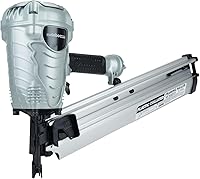
The Metabo HPT NR90AES1 runs 21 degree plastic collated framing nails from 2 in to 3-1/2 in. It weighs 7.5 lb and lists roof decking and wall sheathing among its applications.
A flip switch moves between sequential and contact nailing, and the depth adjuster works without tools. The head guard comes off quickly for maintenance, which saves time on a long roof job.
A 30 degree option for tight spots
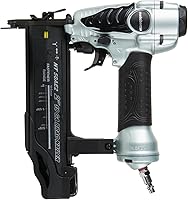
The Metabo HPT NR90ADS1 runs 30 degree paper collated nails from 2 in to 3-1/2 in. Its 30 degree magazine is built to reach tight corners where a straight body won't fit, and it weighs 7 lb.
It takes clipped head and offset round head nails. The same tool lists roof decking and sub flooring among its applications.
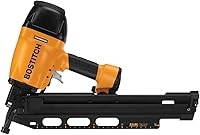
The NuMax SFR2190 runs 21 degree plastic collated nails from 2 in to 3-1/2 in. It lists roof decking and subfloors among its uses, weighs 8.6 lb and has an anti-dry-fire mechanism that stops empty fires.
It also has a 360 degree adjustable exhaust, so you can point the air away from your face while you work. The one piece steel drive blade is built to stand up to steady framing work.
Where does a brad nailer still earn its place on a roof job?
The brad nailer stays for trim, not structure. Fascia trim, soffit details and other light finish pieces are its lane.
A roof job has two parts. The structural fastening, meaning decking, sheathing and shingles, goes to a framing or roofing nailer.
The finish work, such as trim boards and small details, can go to a brad nailer.
Mixing the two up is the mistake. A brad in a shingle or a sheet of sheathing isn't a shortcut, it's a weak point.
Keep the brad where it belongs and the roof where it belongs.
If you're still sorting out which trim tool fits which job, our brad nailer vs crown stapler comparison helps you pick the right one for finish work.
Does nail angle matter for roof fasteners?
Yes, nail angle has to match the nail your tool takes. A 21 degree tool takes 21 degree plastic collated nails.
A 30 degree tool takes 30 degree paper collated nails.
Mixing angles jams the magazine and stops the tool. So pick the angle, then buy nails to match, and you won't fight the gun on a roof.
Roofers often use 21 degree for decking because plastic collated nails are common and the binders hold up well on a big job. The 30 degree setup suits tight spots where the angled body helps.
The two Metabo HPT models show the split. The NR90AES1 runs 21 degree plastic collated, and the NR90ADS1 runs 30 degree paper collated.
Buy the gun to match the nails you can get, or buy the nails to match the gun you own.
How do you keep the right tool running on a roof?
Keep the air supply steady and the tool clean. A framing nailer needs enough air pressure to sink a nail fully, and a steady supply keeps it firing without misfires.
Check the oil level if the maker calls for lubrication, and drain water from the compressor line. Water in the line can gum up the tool and slow it down.
Set the depth adjuster before you start so nails sit flush or slightly countersunk as the roof calls for. Then run a test board to confirm the setting.
A quick head guard removal helps here. The Metabo HPT models make the head guard easy to take off for cleaning, which is part of routine maintenance on a pneumatic tool.
Clear the nose of jammed nails and wipe down the magazine so collated strips feed smoothly.
Keep the brad nailer for trim and store it dry. Whichever tool you're buying first, our guide to the best brad nailer covers trim options if your roof job also includes finish work.
The short version
Don't put a brad nailer on a roof. It can't drive the long, thick, wide-head nails that decking and shingles need, and the holding power isn't there.
If your question is can I use a brad nailer for roofing, the practical answer is to reach for a framing nailer instead.
Pick the Metabo HPT NR90AES1 for roof decking and sheathing at 21 degree, the Metabo HPT NR90ADS1 for tight corners at 30 degree, or the NuMax SFR2190 as a budget air framing nailer. Keep the brad nailer for fascia and trim, and leave the structural fastening to the tool built for it.
Frequently asked questions
Can I use a brad nailer for roofing?
No. A brad nailer drives small nails that are too short and too thin to hold roof decking or shingles.
Roof work needs a framing nailer or a roofing nailer with larger fasteners and more driving power.
What nail gun do you use for roof decking?
A framing nailer is the usual choice. It drives 2 to 3-1/2 in framing nails into rafters and sheathing, and models like a 21 degree framing nailer list roof decking as an application.
Will a brad nailer hold shingles?
No. Shingles need wide-head roofing nails with enough shank to hold through wind and weather.
A brad head is too small and the shank too thin, so the shingle can lift.
Can a brad nailer nail sheathing?
Only thin paneling in light indoor work. Roof sheathing needs longer, thicker nails driven with force that a brad nailer can't produce, so use a framing nailer.
Is a brad nailer useful anywhere on a roof job?
Trim and finish work, not the roof itself. Keep the brad nailer for fascia trim, soffit details and interior finish, and leave the structural fastening to a framing nailer.