Brad Nailer vs Crown Stapler: When to Use Each (November 2026)
Use a brad nailer for discreet fastening in trim and furniture; use a narrow crown stapler when its wider staple legs suit cabinetry, paneling or similar work. Match the tool to the fastener your project calls for.
On this page (8 sections)
- Brad nailer vs crown stapler: which should you choose?
- How do brads and narrow crown staples differ?
- When does a brad nailer make more sense?
- When is a narrow crown stapler the better fit?
- Which is easier to set up and move around?
- Can you use brads and staples for the same project?
- What safety steps apply to both tools?
- Which tool should you pick for your project?
Use a brad nailer for discreet fastening in trim and furniture; use a narrow crown stapler when the wider staple legs suit the material or joint. In a brad nailer vs crown stapler choice, the fastener shape and the project plan matter more than the tool's name.
A brad is a slim nail with a small head. A narrow crown staple has 2 legs joined by a short crosspiece, so it holds across a wider area and leaves a more visible mark.
Both tools come in 18-gauge options, but they don't use the same fastener. Check what your project calls for before loading either one.
 Best for discreet trim fastening
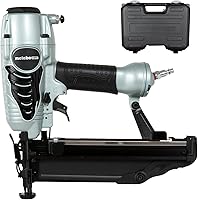
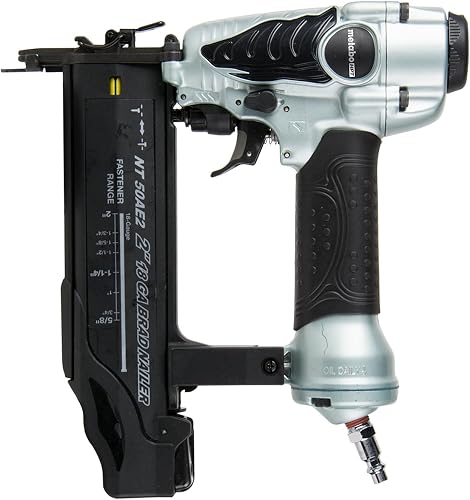
Metabo HPT NT50AE2 18 Ga Pneumatic Brad Nailer
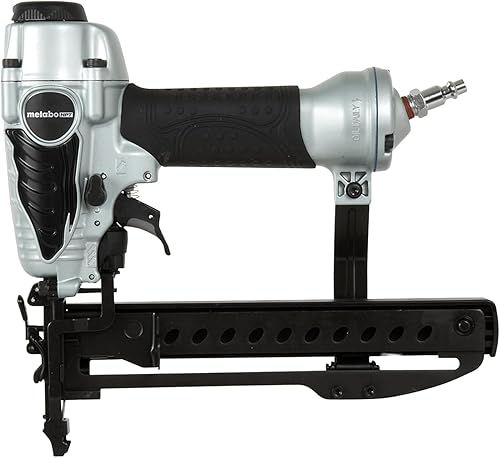 Best for air-powered staple work
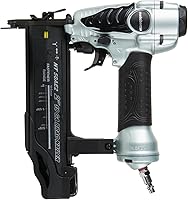
Metabo HPT N3804AB3 18 Ga Narrow Crown Stapler
Brad nailer vs crown stapler: which should you choose?
Choose the brad nailer for a small, less noticeable fastening point; choose the narrow crown stapler when the staple's wider hold fits the work. Don't swap fasteners just because both tools are used for finish work.
The Metabo HPT NT50AE2 accepts 18-gauge brad nails from 5/8 to 2 in. Metabo HPT describes it for trim, furniture building and other finishing applications.
The Metabo HPT N3804AB3 accepts 18-gauge narrow crown staples from 1/2 to 1-1/2 in. It's intended for internal and external trim work, furniture, cabinetry and other fine finish work.
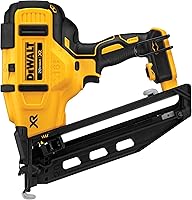
The DEWALT DCN681B also drives 18-gauge narrow crown staples from 1/2 to 1-1/2 in. It's battery powered and works with DEWALT 20V MAX batteries.
Brad nailer or crown stapler for visible surfaces?
A brad is usually the cleaner choice when you want the fastening point to be less noticeable. Its slim profile leaves a narrower mark than the crosspiece of a staple.
A staple may fit better when the wider fastening area suits a cabinet, furniture or paneling job. That wider mark is part of the tradeoff, especially on a surface you'll leave exposed.
These aren't universal rules for every material. Follow the project's fastening plan and use the tool and fastener combination it specifies.
How do brads and narrow crown staples differ?
Brads are individual slim nails; narrow crown staples are 2-legged fasteners joined by a crown. Their shape affects both the mark they leave and the way they hold the work.
An 18-gauge brad has a small head and narrow shank. The small hole is useful on finish surfaces where a larger fastener mark would need more filling or touch-up.
A narrow crown staple spreads across a wider path because its legs are connected. This can suit tasks such as cabinetry and paneling, but the crosspiece remains more visible than a brad.
The fastener's length also matters. The Metabo HPT brad nailer covers 5/8 to 2 in, while both staplers listed here cover 1/2 to 1-1/2 in staples.
Don't compare the length figures as though the fasteners were interchangeable. Nail and staple geometry differ, so use the project specification to select the correct type and length.
When does a brad nailer make more sense?
Use a brad nailer for trim, furniture building and finish work when a narrow fastening point is appropriate. The Metabo HPT NT50AE2 is an air-powered 18-gauge option for those jobs.
Its tool-less depth adjustment lets you adjust how far the brad drives into the workpiece. A no-mar tip helps protect the surface from accidental marks, and the adjustable exhaust can direct dust, debris and oil away from the finished project.
This model has a selective actuation switch for bump or sequential fire. Its easy-to-clear nose is designed to help remove a jammed nail.
The NT50AE2 weighs 2.2 lb and needs an air compressor and hose. If you want to explore similar tools, our guide to what a brad nailer is used for explains common home-project uses.
When is a narrow crown stapler the better fit?
Choose a narrow crown stapler for cabinetry, furniture or paneling when staples suit the material and fastening plan. The joined legs create a wider fastening point than a brad.
The Metabo HPT N3804AB3 is pneumatic and holds up to 100 staples. It has tool-free depth adjustment and a selective actuation switch for sequential or contact firing.
At 2.3 lb, it is a lightweight option for staple work that also includes internal and external trim. Its angled air fitting points upward to help keep the hose away from the workpiece.
The DEWALT DCN681B removes the need for an air hose because it runs on a DEWALT 20V MAX battery. Its tool-free depth adjustment and selectable sequential or contact actuation support control over staple placement.
The DCN681B is sold as a tool only, so it doesn't include a battery in the listed components. Check your battery setup before choosing it.
For related tool options, compare our brad nailer picks and trim nailer guide.
Which is easier to set up and move around?
A cordless stapler avoids the compressor and hose; a pneumatic tool needs an air supply but can be lighter. Think about how far you'll move, the tools you already own and the available power setup.
The NT50AE2 weighs 2.2 lb, and the N3804AB3 weighs 2.3 lb. Both are pneumatic, so a compressor and hose are part of the setup.
The DEWALT DCN681B uses a 20V MAX battery and is listed as a tool only. It weighs 6.5 lb, so compare its weight with your comfort and the time you'll hold it.
Pneumatic models may be easier to carry between work areas, but the hose can limit movement and require compressor setup. A cordless stapler removes that hose, but you need a compatible battery.
If you're still deciding between tool types, our plain guide to types of nail guns explains how common nailers differ by fastener and task.
Can you use brads and staples for the same project?
Sometimes either fastener may work for a broad task, but they aren't substitutes when a plan specifies one type. The material, joint and desired finish should decide.
A cabinet project may call for narrow crown staples in one part and brads in another. The correct choice depends on the pieces being joined, the location of the fastening and whether the mark will remain visible.
For trim, don't assume that the staple's wider hold is better. A visible crown can be harder to hide than a brad, and the material may not be suited to either fastener.
Check the instructions for the material, assembly or project. If there is no clear fastening guidance, confirm the suitable fastener with the material or tool manufacturer before proceeding.
What safety steps apply to both tools?
Wear eye protection, keep hands clear of the nose and disconnect the power source before clearing a jam. Follow the tool manual for safe loading and firing.
For pneumatic nailers and staplers, disconnect the air supply before maintenance or a jam clear. For the cordless DEWALT stapler, remove the battery as directed by its manual.
Don't point the tool toward yourself or another person, even when you think it's empty. Keep the tool pressed against the work surface as directed, and never bypass its safety features.
Read our nail gun safety tips before using a nailer or stapler. Check each tool manual for its specific loading, operating and maintenance steps.
Which tool should you pick for your project?
Pick a brad nailer for trim and finish work that calls for a slim nail; pick a narrow crown stapler when the plan calls for staples and their wider crown suits the joint. For crown molding, start with our guide to choosing a nailer for crown molding.
Choose the NT50AE2 if you want an air-powered brad nailer for 18-gauge nails from 5/8 to 2 in. Choose the N3804AB3 if an air-powered stapler with a 100-staple capacity fits your cabinet, furniture or trim work.
Choose the DEWALT DCN681B if you need a cordless narrow crown stapler and already use compatible DEWALT 20V MAX batteries. In each case, follow the project's fastener requirements and the tool's manual.
Frequently asked questions
What is the main difference between a brad nailer and a crown stapler?
A brad nailer drives a slim 18-gauge nail with a small head, while a narrow crown stapler drives a staple with 2 legs joined by a crown. Brads leave a narrow fastening point; staples span a wider area.
Use the fastener specified for your material and project.
Can I use a crown stapler instead of a brad nailer for trim?
Sometimes, but only if the trim and project allow a staple crown to show. Staples create a wider mark than brads, so they may stand out on visible finish surfaces.
Check the material, fastening plan and manufacturer guidance before substituting one tool for the other.
Are brad nailers or crown staplers better for cabinets?
Either can suit cabinet work, depending on the joint and material. Narrow crown staples are used for furniture and cabinetry, while brad nailers are suited to trim, furniture building and other finish work.
Follow the cabinet plan and choose the fastener it specifies.
Does a cordless crown stapler need a compressor?
No. The DEWALT DCN681B is battery powered and compatible with DEWALT 20V MAX batteries, so it doesn't need a gas supply, compressor or hose.
The Metabo HPT N3804AB3 is pneumatic and needs an air supply.
Which tool is better for crown molding?
A brad nailer is generally the more suitable choice for visible crown molding because its narrow brad leaves a smaller fastening point than a staple crown.
Fastener length and placement still depend on the molding, backing and installation plan. See our crown molding nailer guide for more.