Brad Nailer vs Pin Nailer: What Is the Difference?
A brad nailer drives 18-gauge nails with small heads, while a pin nailer drives 23-gauge headless pins. Brads hold trim with real grip and leave a hole you fill; pins leave a hole so small it often needs no filler, but they hold far less.
On this page (8 sections)
- What is the difference between a brad nailer and a pin nailer?
- How do the holes each one leaves compare?
- How much holding power does each one have?
- Which jobs suit a brad nailer?
- Which jobs suit a pin nailer?
- Can you use one in place of the other?
- What else changes the choice: gauge, length and air?
- Which should you buy first?
A brad nailer drives 18-gauge nails with small heads, while a pin nailer drives 23-gauge headless pins. Brads hold trim with real grip and leave a hole you fill; pins leave a hole so small it often needs no filler, but they hold far less.
The difference between a brad nailer and a pin nailer comes down to one thing: the fastener. That changes the hole you patch, the grip you get and the jobs each tool can handle.
Pick the brad nailer for holding power, the pin nailer for near-invisible fastening.
What is the difference between a brad nailer and a pin nailer?
The brad nailer fires nails with heads; the pin nailer fires headless pins. That single difference drives every other choice between them.
An 18-gauge brad has a small T-shaped head. The head is what stops the nail pulling through soft trim and gives the joint its grip.
The trade is a visible hole that needs filler before paint or stain.
A 23-gauge pin has no head at all. It punches a hole close to the size of the shank, so the mark nearly vanishes in the grain.
Because there's no head, the pin relies on friction and glue to hold a part in place.
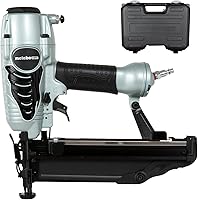
The Metabo HPT NT50AE2 shows what a brad tool looks like in practice. It drives 18-gauge brads from 5/8 in up to 2 in and has a selective actuation switch for bump fire or sequential fire.
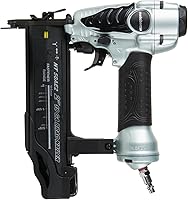
A pin tool like the Metabo HPT NP35A fires 23-gauge headless pins in five lengths from 5/8 in to 1-3/8 in.
How do the holes each one leaves compare?
A brad hole needs filler; a pin hole usually doesn't. The size gap is the whole reason both tools exist.
Painters call the brad hole a "nail set" mark. On painted baseboard you fill it with wood putty, sand it smooth and touch up the paint.
On stained trim you use a color-matched wax stick or filler so the patch blends.
Pin holes are smaller than brad holes. On clear-coated oak or maple, a pin hole often closes up on its own as the wood swells, and many finishers leave it alone.
That's why cabinet shops and furniture restorers keep a pin nailer on the bench.
Neither tool leaves a mark you can ignore forever. A pin hole in dark stain can still catch light at the right angle, so test on scrap before you commit to a visible face.
Does a pin nailer really leave a smaller hole?
Yes. The 23-gauge pin is thinner than the 18-gauge brad, so the hole is smaller in both width and the amount of wood it disturbs.
The Metabo HPT NP35A fires headless pins, and the maker says they produce near-invisible holes.
The smaller shank also means less splitting in thin stock like 1/4 in paneling.
How much holding power does each one have?
A brad holds noticeably more than a pin. The head and thicker shank give the brad grip that a headless pin can't match.
Picture a length of baseboard pulled away from drywall. Brads driven through the board into studs resist that pull because the head bears on the trim face.
Pins driven the same way mostly rely on friction along the shank and whatever glue you added.
That's why pins suit parts held by adhesive or by another fastener. Glazing bead around a window sash, a thin panel laid in place, a small molding run over a glued joint: the pin holds the part while the glue sets.
It isn't the joint's main strength.
Brads also handle longer fasteners. The NT50AE2 takes brads to 2 in, which reaches through casing and into framing.
The NP35A tops out at 1-3/8 in pins, so it's for thinner assemblies where the part plus the substrate stay shallow.
Which jobs suit a brad nailer?
Use a brad nailer for anything that needs grip and a fastener up to 2 in. That covers most interior trim work.
Baseboard, door and window casing, chair rail and shoe molding all take 18-gauge brads well. Furniture building and cabinet face frames use brads where the head won't show on a finished face.
The 2 in length lets you reach through 3/4 in trim into a stud for a solid bite.
Both brad tools here fit that work. The Metabo HPT NT50AE2 weighs 2.2 lb and includes a no-mar tip and tool-less depth dial.
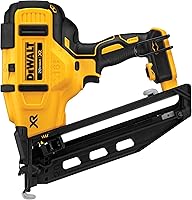
The DeWalt DWFP12231 kit drives the same 18-gauge 5/8 in to 2 in brads and adds a tool-free jam release and a removable non-marring nose tip.
Pick the brad nailer when the joint must stay put without help from glue or a second fastener. For heavier trim that needs still more grip, a 16-gauge finish nailer is the next step up; our guide to the difference between a brad and finish nailer breaks down when to move up.
Which jobs suit a pin nailer?
Use a pin nailer for delicate trim where the hole must nearly disappear. Cabinet work, paneling and craft assembly are its home.
Picture frame corners, glazing bead, small moldings and cabinet face trim all call for a pin. The Metabo HPT NP35A lists those applications and fires headless pins in five lengths with automatic adjustment.
A dual trigger helps place each pin accurately, and a rear exhaust sends oil and debris away from the work.
Craft work and small repairs also fit. A pin holds a thin part in place while glue dries, and the mark it leaves rarely needs attention.
Because the pin is headless, it won't split thin stock the way a headed brad might.
The trade is reach. Pins stop at 1-3/8 in and hold light parts only.
For crown molding runs and longer trim, you want a nailer for crown molding built for the job. For trim that needs more hold than either of these, a 16 gauge finish nailer drives the heavier fastener.
Can you use one in place of the other?
Not as a straight swap. Each tool does a job the other can't cover well.
A pin nailer can't carry a baseboard run. The headless pin lacks the grip to pull a warped board tight to the wall and keep it there.
Forcing it means more pins, more time and a joint that still moves.
A brad nailer can't hide its mark. On clear-coated cabinets or picture frames, a filled brad hole shows more than a pin hole would.
The 18-gauge shank also splits thin stock more often.
The practical answer is to own both if you do finish work for a living. For a homeowner with one trim project, the brad nailer covers more of the work and its holes fill easily.
Add a pin nailer when a project puts the hole in plain sight.
Which pin nailer should a beginner start with?
Start with a 23-gauge tool that has depth adjustment and a no-mar tip. The Metabo HPT NP35A meets both, and its five-length range covers most light trim.
See how it stacks up in our roundup of the 23 gauge pin nailer options.
What else changes the choice: gauge, length and air?
Gauge sets the hole size, length sets the reach and air supply sets the workflow. Check all three before you buy.
Gauge is the wire thickness. 18-gauge brads are thicker than 23-gauge pins, so the gauge number tells you the hole and the grip.
All three tools here run on compressed air and need a compressor and hose.
Length decides what the fastener can reach through. Brads to 2 in suit casing into framing; pins to 1-3/8 in suit thin trim and panel work.
Match the length to the material stack, not the tool's maximum.
Weight matters for overhead work. The NT50AE2 is 2.2 lb and the NP35A is 2.0 lb, so both stay light enough to hold up a wall run.
The DeWalt kit weighs 2.65 lb but includes a belt hook for ladder work.
Which should you buy first?
Buy the brad nailer first if you're equipping one trim job. It covers more of the work and the holes are simple to fill.
The Metabo HPT NT50AE2 is the stronger first buy of the three: 18-gauge brads to 2 in, a 2.2 lb body, a no-mar tip and a tool-less depth dial. The DeWalt DWFP12231 kit is the pick if you want a jam release and a belt hook in the box.
Add the Metabo HPT NP35A when the difference between a brad nailer and a pin nailer starts to matter on a project with visible faces. Start with the brad, add the pin when the hole has to disappear.
Frequently asked questions
Can a pin nailer replace a brad nailer?
No. Pins have no head and a very thin shank, so they hold light parts like glazing bead and small moldings but not heavier trim.
Use a brad nailer where the joint needs grip, and a pin nailer to hold a part in place while glue dries.
Do pin nails really leave no visible hole?
They leave a tiny hole that often disappears in the wood grain. Pin nailers fire headless 23-gauge pins that punch a hole much smaller than an 18-gauge brad, so the mark is easy to overlook on stained or clear-coated trim.
Which one should I buy first for trim work?
Buy the brad nailer first. It covers baseboard, casing, shoe molding and furniture assembly, and the holes are easy to fill.
Add a pin nailer later for delicate trim, cabinets and craft work where the hole matters most.