Best 16 Gauge Finish Nailers: Top 10 Picks (November 2026)
The best 16 gauge finish nailers include the Metabo HPT NT65M2S 16 Ga Straight Finish Nailer for light pneumatic trim work, the DeWalt DCN660B 20V 16 Ga Angled Finish Nailer for cordless angled access, and the DeWalt DCN662B 20V 16 Ga Straight Finish Nailer for cordless straight nailing.
On this page (4 sections)
The best 16 gauge finish nailer for most trim work is the Metabo HPT NT65M2S, a light pneumatic tool that accepts 1–2.5 in nails. For cordless use, the DeWalt DCN660B adds an angled magazine, while the straight DCN662B fits buyers who prefer a straight nail path.
A 16 gauge finish nailer is a practical choice for baseboards, door casing, crown molding and other heavier trim. Your best pick depends on whether you already have compatible batteries or an air compressor, plus the shape of the work area.
If you are unsure whether a finish nailer or brad nailer suits your project, compare them in our 16 gauge vs 18 gauge nailer guide. Our finish nailer vs framing nailer comparison also explains why these tools handle different jobs.
Our picks at a glance
-
1
 Best for light pneumatic trim work
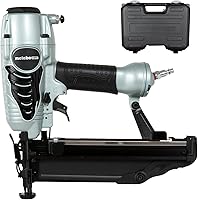
Metabo HPT NT65M2S 16 Ga Straight Finish Nailer
9.1/10 our score
See it on Amazon -
2
 Best for cordless angled access
DeWalt DCN660B 20V 16 Ga Angled Finish Nailer
8.9/10 our score
See it on Amazon -
3
 Best for cordless straight nailing
DeWalt DCN662B 20V 16 Ga Straight Finish Nailer
8.6/10 our score
See it on Amazon
- 4
 Check it
Milwaukee 3020-20 M18 FUEL 16 Ga Finish Nailer
Best for M18 system users - 5
 Check it
Makita XNB02Z 18V LXT 16 Ga Straight Finish Nailer
Best for Makita LXT owners - 6
 Check it
Bostitch BTFP71917 16 Ga Finish Nailer Kit
Best for pneumatic kit value - 7
 Check it
Ryobi P326 ONE+ 16 Ga Finish Nailer
Best for ONE+ cordless setups - 8
 Check it
Craftsman V20 CMCN616B 16 Ga Finish Nailer
Best for balanced cordless handling - 9
 Check it
Metabo HPT NT1865DSA 18V 16 Ga Finish Nailer Kit
Best for a ready-to-work cordless kit - 10
 Check it
Porter-Cable FN250SB 16 Ga Finish Nailer
Best for a basic pneumatic option
The best 16 gauge finish nailers for trim and casing
The Metabo HPT NT65M2S is the top pick for a light pneumatic setup, while the DeWalt DCN660B is the cordless angled choice. The remaining picks cover straight cordless tools, battery platforms and a ready-to-use kit.
Metabo HPT NT65M2S 16 Ga Straight Finish Nailer: Best for light pneumatic trim work
- 3.7 lb weight
- 1–2.5 in 16 gauge finish nails
- Tool-free depth adjustment
- Bump or sequential firing
A light, well-balanced pneumatic pick for molding, chair rail and cabinetry. Its switch lets you choose bump or sequential firing.
Pros
- Light 3.7 lb body
- Wide nail-length range
- Adjustable exhaust and air duster
Cons
- Requires an air compressor and hose
- Straight magazine
The NT65M2S weighs 3.7 lb and accepts 16 gauge finish nails from 1 to 2.5 in. That range makes it a fit for projects that move between thinner casing and deeper trim, as long as the nail length suits the material.
Its selective actuation switch changes between bump fire and sequential fire. Tool-free depth adjustment helps set nail heads flush or countersunk, and the 360-degree exhaust can be aimed away from you.
Metabo HPT also includes an air duster button to clear dust and debris from the work surface. A no-mar tip helps protect the workpiece from unintended marks.
Choose this model if you already have an air compressor and want a light tool for molding, chair rail or cabinetry. It is a pneumatic nailer, so factor the hose and compressor into your setup.
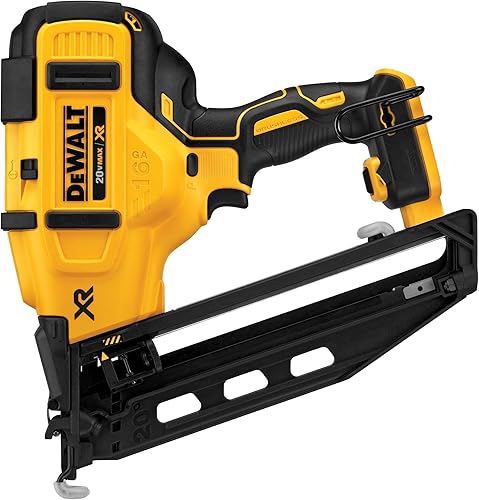
DeWalt DCN660B 20V 16 Ga Angled Finish Nailer: Best for cordless angled access
- Cordless 20V MAX platform
- Angled magazine
- 1-1/4–2.5 in nails
- Tool-free jam release
The cordless DCN660B avoids a compressor and hose, while its angled magazine can help reach tight spots. It has tool-free depth adjustment and jam release.
Pros
- No compressor or hose
- Sequential or contact actuation
- LED lights for work area and diagnostics
Cons
- Battery is not included
- Angled magazine uses a different nail format
The DCN660B suits trim work where you want cordless movement and an angled magazine. It drives 16 gauge angled finish nails from 1-1/4 to 2.5 in, a range that covers common casing and baseboard tasks.
Its brushless motor runs on DeWalt 20V MAX batteries, and the tool does not need a compressor, hose or gas cartridge. A selectable trigger offers sequential or contact actuation, while the tool-free depth adjustment lets you set nail depth.
The built-in LED lights support workspace illumination and tool diagnostics. If a nail jams, the tool-free release helps clear it, and a stall release lever can reset the driver blade.
This is a tool-only option, so check your battery setup before choosing it. For more detail on the angled format, see our angled vs straight finish nailer guide.
DeWalt DCN662B 20V 16 Ga Straight Finish Nailer: Best for cordless straight nailing
- Cordless 20V MAX platform
- Straight magazine
- 1-1/4–2.5 in nails
- Micro nose
This straight cordless DeWalt suits baseboards, casing and crown molding. Its micro nose improves line of sight compared with the DC616.
Pros
- No compressor or hose
- Brushless motor
- Tool-free depth adjustment
Cons
- Battery is not included
- Straight magazine may be less suited to tight corners
The DCN662B is DeWalt’s straight-magazine cordless pick in this group. It drives 16 gauge straight finish nails from 1-1/4 to 2.5 in for baseboards, door and window casing, and crown molding.
Like the angled DCN660B, it runs on the 20V MAX platform and has a brushless motor. The micro nose improves line of sight and nail placement compared with the DeWalt DC616.
A tool-free trigger selector changes between sequential and contact actuation. Depth adjustment is also tool-free, helping you set the nail head without reaching for another tool.
Pick the DCN662B if you want a straight nailer and already use DeWalt 20V MAX batteries. Its battery is not included, so include that in your tool-system choice.
Milwaukee 3020-20 M18 FUEL 16 Ga Finish Nailer: Best for M18 system users
- Cordless M18 platform
- Straight finish nails from 1–2.5 in
- Up to 3 nails per second
- Tool-free jam clearing
The M18 finish nailer has sequential and contact firing, plus tool-free depth adjustment and jam clearing. Milwaukee says it fires up to 3 nails per second.
Pros
- No gas cartridge
- Tip storage on magazine
- Reversible belt hook
Cons
- Tool only
- Listed weight is 8.1 lb
The Milwaukee 3020-20 is a cordless straight finish nailer for users in the M18 system. It accepts 1–2.5 in 16 gauge straight finish nails and offers both sequential and contact actuation.
Milwaukee says the tool fires up to 3 nails per second and drives up to 700 nails per charge with an M18 CP2.0 battery. It also has tool-free depth adjustment, a jam-clearing latch and a work light.
The magazine stores a tip, and the belt hook can be reversed. The tool is sold without a compressor or gas cartridge, though you will need an M18 battery and charger.
Choose it if you already own M18 batteries and want a straight cordless tool. Its listed weight is 8.1 lb, so compare that with the lighter pneumatic Metabo HPT if tool weight is a priority.
Makita XNB02Z 18V LXT 16 Ga Straight Finish Nailer: Best for Makita LXT owners
- Cordless 18V LXT platform
- 1–2.5 in nails
- Anti-dry fire mechanism
- Up to 1,000 nails per 5.0Ah charge
The Makita XNB02Z uses an 18V LXT battery and can drive up to 1,000 nails per charge with a 5.0Ah battery. Its anti-dry fire mechanism helps prevent blank shots.
Pros
- No compressor or hose
- Anti-dry fire mechanism
- Tool-less depth adjustment
Cons
- Battery is sold separately
- Listed weight is 8.12 lb
The Makita XNB02Z is a straight finish nailer for the 18V LXT battery system. It drives 16 gauge nails from 1 to 2.5 in, and Makita says a 5.0Ah battery can drive up to 1,000 nails per charge.
An anti-dry fire mechanism is designed to help prevent blank shots and damage to the work surface. A compact center height helps you see around the nose when fastening in tight spots.
The tool has a reversible belt clip and tool-less depth adjustment. It is cordless, so it does not need a compressor or air hose, but the battery is sold separately.
Pick it if you already own compatible Makita batteries and want a straight nailer with a broad nail-length range. The listed weight is 8.12 lb, so keep that in mind for extended overhead work.
Bostitch BTFP71917 16 Ga Finish Nailer Kit: Best for pneumatic kit value
- Pneumatic operation
- 1-1/4–2.5 in nails
- Oil-free operation
- Case and extra no-mar tips included
This Bostitch kit includes an air fitting, carrying case and extra no-mar tips. Oil-free operation reduces the risk of oil stains.
Pros
- Tool-free jam release
- Dial-A-Depth control
- Selectable firing modes
Cons
- Requires an air compressor and hose
- Pneumatic setup takes more room
The Bostitch BTFP71917 is a pneumatic kit for buyers who want several useful items in the box. It drives 16 gauge nails from 1-1/4 to 2.5 in, and the kit includes an air fitting, carrying case and extra no-mar tips.
Oil-free operation reduces the risk of oil stains on trim. A Dial-A-Depth control adjusts countersinking, while the selectable trigger supports sequential or contact operation.
When a nail jams, the tool-free release helps with removal. The kit also has a rear air exhaust and a belt hook with an integrated pencil sharpener.
Choose this kit if you already have, or plan to use, an air compressor and want the case and extra tips. Bostitch gives it a 7-year limited warranty, with a 1-year limited warranty in production applications.
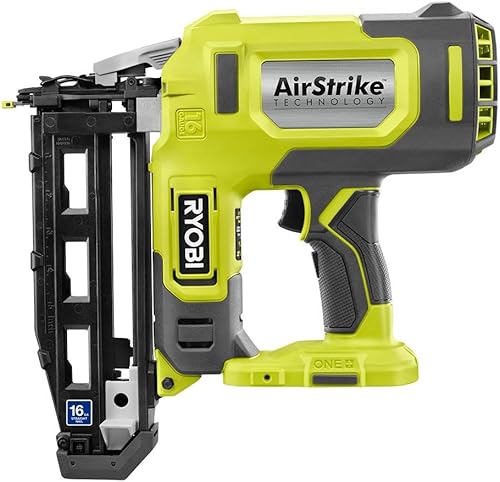
Ryobi P326 ONE+ 16 Ga Finish Nailer: Best for ONE+ cordless setups
- Cordless 18V ONE+ platform
- AirStrike technology
- Smaller nose than P325
- Adjustment dial for air pressure speed
The P326 uses Ryobi AirStrike technology, so it does not need a compressor, hose or gas cartridge. Its smaller nose is designed for tighter access than the P325.
Pros
- No compressor or hose
- Pressure-speed adjustment dial
- For crown molding, baseboard and exterior trim
Cons
- Tool only
- Battery and charger are not included
The Ryobi P326 suits buyers building around the 18V ONE+ system. Its AirStrike technology removes the need for a compressor, hose or gas cartridge, and the straight finish nailer can sink nails up to 2.5 in.
Ryobi says the P326 has a nose 78% smaller than the P325. That design aims to improve access in tight spots, and an adjustment dial regulates air pressure speed.
The P326 is a tool-only model, so make sure you have a compatible battery and charger. It is described for crown molding, baseboard and exterior trim.
Choose it if you use ONE+ tools and want cordless setup for trim jobs. Compare the exact battery and charger you own before adding it to your kit.
Craftsman V20 CMCN616B 16 Ga Finish Nailer: Best for balanced cordless handling
- Cordless V20 platform
- Up to 375 nails per charge
- Tool-free jam and stall settings
- Belt hook
The CMCN616B is designed to work without a compressor, hose or gas cartridge. Craftsman says it can drive up to 375 nails per charge.
Pros
- Tool-free jam and stall settings
- Designed for varied climates and materials
- Contoured handle
Cons
- Battery and charger are sold separately
- Listed weight is 7.6 lb
The Craftsman V20 CMCN616B offers cordless operation without a compressor, hose or gas cartridge. Craftsman says it can drive up to 375 nails per charge, and its tool-free settings help with jam and stall issues.
A contoured over-molded handle and balanced design aim to make the tool comfortable to hold. It also has a belt hook for access while moving around a work area.
This is a bare tool, with battery and charger sold separately. Its design is intended to provide firing power across varied climates and materials.
Pick it if you have a compatible V20 battery and want a cordless finish nailer with jam and stall controls. For nailer safety basics before your next trim job, read our nail gun safety tips.
Metabo HPT NT1865DSA 18V 16 Ga Finish Nailer Kit: Best for a ready-to-work cordless kit
- 18V cordless kit with battery and charger
- 1–2.5 in nails
- Up to 800 nails per charge
- 5.7 lb without battery
This Metabo HPT kit includes a battery, charger, bag and safety glasses. It has tool-less depth adjustment and a switch between bump and sequential modes.
Pros
- Battery and charger included
- No compressor or hose
- Up to 3 nails per second
Cons
- Battery adds weight beyond the 5.7 lb tool weight
- Higher score alternatives fit more specific needs
The Metabo HPT NT1865DSA is a cordless kit that includes a battery, charger, bag and safety glasses. It drives 1–2.5 in 16 gauge finish nails and weighs 5.7 lb without the battery.
Its tool-less depth adjustment helps set nail depth, and a switch changes between bump and sequential mode. The brushless motor and Air Spring Drive System are designed for fast operation without ramp-up time.
Metabo HPT says the included 2.0Ah battery supports up to 800 finish nails per charge. The cordless design removes the compressor and hose from the work area.
Choose this model if you want an included battery and charger rather than a bare tool. Remember that the 5.7 lb figure is for the nailer without its battery.
Porter-Cable FN250SB 16 Ga Finish Nailer: Best for a basic pneumatic option
- Pneumatic finish nailer
- 16 gauge
- 100 nail capacity
The FN250SB is a straightforward pneumatic option for buyers who already have compatible air equipment. Its stated capacity is 100 nails.
Pros
- Simple pneumatic setup
- 100 nail capacity
Cons
- Requires an air compressor and hose
- Fewer listed features than other picks
The Porter-Cable FN250SB is a basic pneumatic option for someone who already has air equipment. It has a stated 100 nail capacity and uses 16 gauge finish nails.
The available details for this model are limited, so it is harder to compare its adjustment and jam-clearing features with the other picks. Before choosing it, check that your compressor and hose setup are suitable for the work you plan to do.
This nailer makes most sense if you want a simple tool for occasional trim jobs and can confirm the fit with your existing air setup. Buyers seeking a broader feature set may prefer the Metabo HPT or Bostitch pneumatic picks above.
How we chose these 16 gauge finish nailers
We compared the listed nail lengths, power sources, firing controls, depth adjustments, included kit parts and features tied to trim access. The score weighs specs, features and buyer feedback against what you’re shopping for.
A pneumatic model can be a good fit when you already have a compressor and hose. Cordless models reduce setup gear and suit buyers who own compatible batteries, but some are tool-only.
Magazine style matters too. Angled and straight tools use different nail formats, so consider the corners and orientations in your project before choosing one.
What to check before buying a 16 gauge finish nailer
Choose a 16 gauge finish nailer by matching nail length, power source and magazine style to your trim and tools. Then check depth control, jam access and whether the package includes the battery or air fitting you need.
Which nail length fits your trim?
Nail length should pass through the trim and reach the backing material with enough hold. The picks here cover lengths from 1 to 2.5 in, but some begin at 1-1/4 in.
Check the thickness of the trim and what sits behind it before loading nails. If you are working on baseboards, our guide to nail sizes for baseboard trim covers that decision in more detail.
Should you buy pneumatic or cordless?
Pneumatic tools rely on a compressor and hose, which can suit a workshop that already has air equipment. Cordless tools can be easier to move between rooms or work areas because they do not need that setup.
Battery compatibility can narrow the choice quickly. Compare the brands and battery systems you already own, and check whether a chosen model includes its battery and charger.
Do you need an angled magazine?
An angled magazine may help you reach corners and tight spaces, while a straight magazine provides a direct layout that some buyers prefer. The nail type must match the magazine, so don’t assume one strip works in both styles.
If access is a concern, compare the angled and straight finish nailer differences before buying. Consider the actual trim corners and fastening direction in your project.
Which controls help with a clean finish?
Depth adjustment helps set nail heads flush or countersunk, which matters when trim will be filled and painted. A no-mar tip can help protect the surface, while tool-free jam release is useful if a nail gets stuck.
Selective firing modes also affect how you work. Sequential mode places nails one at a time, while contact or bump mode lets you fire more quickly when the tool is positioned against the work.
Which 16 gauge finish nailer should you choose?
Choose the Metabo HPT NT65M2S if you want a light pneumatic tool with a long nail range and tool-free depth adjustment. Pick the DeWalt DCN660B for cordless angled access, or the DCN662B for a straight magazine on the same 20V MAX system.
If you need an all-in cordless kit, the Metabo HPT NT1865DSA includes a battery and charger. For more trim-tool options, browse our finish nailer and trim guides.
Our score weighs specs, features and buyer feedback against what you’re shopping for.
Our top 3 picks at a glance
-
1
Best for light pneumatic trim work
Metabo HPT NT65M2S 16 Ga Straight Finish Nailer
9.1/10 our score
See it on Amazon -
2
Best for cordless angled access
DeWalt DCN660B 20V 16 Ga Angled Finish Nailer
8.9/10 our score
See it on Amazon -
3
Best for cordless straight nailing
DeWalt DCN662B 20V 16 Ga Straight Finish Nailer
8.6/10 our score
See it on Amazon
Frequently asked questions
What is a 16 gauge finish nailer used for?
A 16 gauge finish nailer is commonly used to attach trim, baseboards, casing, molding and cabinetry. Its nails are thicker than 18 gauge brad nails, which can give a stronger hold in heavier trim.
Match nail length to the material and follow the tool instructions.
Should you choose an angled or straight finish nailer?
Choose an angled finish nailer if its magazine shape helps you reach the corners or narrow spaces in your project. A straight nailer may be a better fit if you want a conventional magazine layout or already have compatible straight nails.
Compare the nail type each tool accepts before buying.
Is a cordless 16 gauge finish nailer worth it?
A cordless model can save setup time because it does not need an air compressor and hose. It makes sense if you value mobility or already own batteries in that tool system.
A pneumatic nailer may suit a fixed workshop where air equipment is already available.
What length nails do 16 gauge finish nailers use?
The range depends on the model. Picks here cover lengths from 1 in to 2.5 in, while some begin at 1-1/4 in.
Choose a length that passes through the trim and gets a secure hold in the backing material without risking hidden wires or pipes.