Pin vs Brad vs Finish Nailer: Which Do You Need?
A pin nailer fires 23-gauge headless pins for near-invisible holes, a brad nailer fires 18-gauge brads for light trim, and a finish nailer fires 16-gauge nails for thicker molding. Pick the lightest fastener the joint will hold, and size up when the trim needs real grip.
On this page (9 sections)
- What is the difference between pin, brad and finish nailers?
- How do the three nailers compare by gauge and holding power?
- When should you use a pin nailer?
- When should you use a brad nailer?
- When should you use a finish nailer?
- Which nailer should you buy first?
- Can one nailer do the work of all three?
- What should you check before you buy?
- Which one fits your next project?
The difference between a pin, brad and finish nailer comes down to three things: fastener gauge, holding power and the size of the hole left behind. A 23-gauge pin nailer hides its work best but grips least, an 18-gauge brad nailer covers most interior trim, and a 16-gauge finish nailer holds the heaviest molding.
Each gun fires a different size of fastener, so the choice really starts with the joint you're building. Pick the lightest nail that will keep the trim tight, and step up a gauge when the piece is thick or heavy.
What is the difference between pin, brad and finish nailers?
The core difference between a pin brad and finish nailer is the fastener: 23-gauge headless pins, 18-gauge brads and 16-gauge finish nails. Lower gauge means a thicker, stronger nail and a bigger hole to fill.
A pin nailer drives headless pins so thin you can often skip the wood filler. A brad nailer drives thin nails with a small head, enough to hold light trim without splitting narrow stock.
A finish nailer drives a thicker 16-gauge nail with more grip for molding and cabinetry.
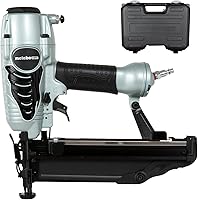
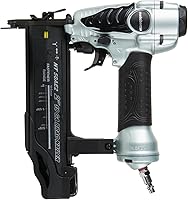
Weight tracks the same order. The Metabo HPT NP35A pin nailer weighs 2.0 lb, the NT50AE2 brad nailer 2.2 lb, and the NT65M2S finish nailer 3.7 lb.
The bigger the fastener, the heavier the tool.
That weight gap is small between the pin and brad guns and jumps at the finish gun. On a ladder running crown molding all afternoon, those pounds add up.
The pin and brad guns also share a compact body that fits between studs and into cabinet corners more easily than the longer finish nailer.
How do the three nailers compare by gauge and holding power?
Gauge decides holding power: 23-gauge pins hold the least, 18-gauge brads hold more, and 16-gauge finish nails hold the most. Match that strength to the weight of the trim you're fastening.
Pin nails work like tiny alignment pegs. They keep a piece in place while glue sets, which is why cabinet makers and picture framers like them.
A brad adds a small head and a slightly thicker shank, so it resists pull-out better on baseboard and casing.
A finish nail goes further. Its 16-gauge shank and larger head bite into thick molding and hold it against the wall.
Where a brad might work loose in heavy crown over time, a finish nail keeps its grip.
The fastener lengths track the gauge too. Pins stop at 1-3/8 in, brads reach 2 in, and finish nails run to 2-1/2 in.
A longer, thicker nail drives deeper into the framing behind the trim, and that depth is where the holding power comes from.
When should you use a pin nailer?
Use a pin nailer for delicate face work where a visible hole would ruin the finish. The 23-gauge headless pins leave a hole so small that a fingertip of filler usually hides it.
Good jobs include glazing bead around glass, thin cabinet panels, small moldings, craft work and picture frame assembly. The Metabo HPT NP35A handles all of these and adds a no-mar tip so the nose doesn't mark the surface.
The magazine adjusts itself to five pin lengths, from 5/8 in up to 1-3/8 in, so you can move from thin panel stock to small molding without changing settings by hand. Pin nails rely on glue for real strength.
They hold the piece while the adhesive cures, so don't expect them to carry load on their own.
When should you use a brad nailer?
Use an 18-gauge brad nailer for baseboards, door casing, window trim and light furniture work. It's the middle gun and the one most home workshops start with.
The Metabo HPT NT50AE2 accepts brads from 5/8 in up to 2 in long, which covers most interior trim in one tool. It also has selective actuation, so you can choose bump fire for speed or sequential fire for precise placement.
Its 2.2 lb body is light enough for overhead work like casing. The no-mar tip protects painted surfaces, and the tool-less depth dial lets you set the nail head just below the wood.
Two other details help on real trim jobs. The 360 degree adjustable exhaust port turns dust and oil away from the finished face, and the reload indicator warns you when nails run low so you don't fire a blank into the trim.
An easy-to-clear nose also speeds up a jam fix.
If you're weighing this gun against the bigger one, our guide to the difference between a brad and finish nailer walks through the overlap.
When should you use a finish nailer?
Reach for a 16-gauge finish nailer when the trim is thick, heavy or load-bearing, like crown molding, chair rail and cabinet trim. The thicker nail holds where a brad would pull free.
The Metabo HPT NT65M2S fires 16-gauge finish nails from 1 in to 2-1/2 in long. Its 3.7 lb frame is heavier than the other two, but that mass helps drive the larger nail cleanly into dense hardwood.
The air duster button blows dust off the work surface, which helps when you're fitting stained trim. A tool-free depth dial lets you adjust the drive for varying materials, and selective actuation gives you the same choice of bump fire or sequential fire as the brad gun.
For a closer look at this class of gun, see the 16 gauge finish nailer roundup.
Which nailer should you buy first?
Buy an 18-gauge brad nailer first if you're outfitting a home shop. It handles the widest range of interior trim, from baseboards to door casing, and takes brads long enough for most of it.
Then add tools as the jobs demand them. A finish nailer earns its place when you install crown molding or cabinet trim in thick stock.
A pin nailer earns its place when you work with delicate face trim and want to skip filling.
If you only ever install light decorative trim, a pin nailer and glue may be all you need. If you build furniture and cabinets, the finish nailer's grip matters more than the smaller hole.
For a dedicated look at the smallest gun, browse the 23 gauge pin nailer picks before you commit.
Can one nailer do the work of all three?
No single nailer covers all three jobs well, but an 18-gauge brad nailer gets closest for a home shop. It can handle light baseboard and casing, though it won't hold heavy crown the way a 16-gauge finish nailer does.
The gaps show up at the edges. A brad nailer's small head won't pull thick molding tight against a wavy wall.
A pin nailer's headless pin won't hold baseboard over time. A finish nailer's larger hole needs filler on fine face work.
Two guns cover most readers: a brad nailer for general trim and a finish nailer for heavy molding. Add the pin nailer when visible holes are the concern.
The fasteners matter more than the brand, so match gauge to the job first.
What should you check before you buy?
Check the fastener range first, then the weight and the trigger. A gun that only takes short nails limits the trim you can install, and a heavy gun tires you out overhead.
Look at the lengths each gun accepts. The NP35A pin nailer takes 23-gauge pins from 5/8 in to 1-3/8 in.
The NT50AE2 brad nailer takes 18-gauge brads from 5/8 in to 2 in. The NT65M2S finish nailer takes 16-gauge nails from 1 in to 2-1/2 in.
What comes in each kit?
All three guns ship as kits, and the extras tell you what the maker expects you to need. The NP35A includes a carrying case, two no-mar tips, safety glasses, a 1/4 in NPT male plug and a hex bar wrench.
The NT50AE2 adds a no-mar tip, hex bar wrenches and a carrying case alongside the safety glasses and air fitting. The NT65M2S kit has the same core set plus the air plug and no-mar tip.
All three carry a five-year warranty.
Then think about control. Selective actuation, found on both the brad and finish guns here, lets you switch between bump fire and sequential fire.
A dual trigger, like the one on the pin nailer, adds a safety step for accurate placement.
A no-mar tip protects the work surface on all three guns. If you'll be working on finished or stained wood, that tip matters as much as the gauge.
Learning the how to use a finish nailer basics first helps you set depth and pressure before you commit to a gun.
Which one fits your next project?
The difference between a pin, brad and finish nailer is really a decision about holding power. Pick a pin nailer for delicate face trim and near-invisible holes, a brad nailer for baseboards and casing, and a finish nailer for thick molding and cabinetry.
Start with the brad nailer if you're buying one gun. Step up to the finish nailer when the trim gets heavy, and reach for the pin nailer when the hole would show.
Match the gauge to the joint and the rest falls into place.
Frequently asked questions
Can a brad nailer replace a finish nailer?
Only on light trim. A brad nailer fires 18-gauge brads up to 2 in long, while a finish nailer fires 16-gauge nails up to 2-1/2 in.
For thick crown molding or heavy casing, the 16-gauge nail's extra grip matters, so the brad nailer is the wrong tool.
Which nailer leaves the smallest hole?
The pin nailer. Its 23-gauge headless pins are so thin they leave a hole you can often hide with a dab of filler.
Brad nails leave a small head mark and finish nails leave the largest of the three, which is why trim carpenters reach for pins on visible surfaces.
Do I need all three nailers?
Most trim jobs run on one or two. Start with an 18-gauge brad nailer for baseboards and casing, add a finish nailer if you install thick molding or cabinetry, and add a pin nailer when you work with delicate face trim.
What gauge nails does each nailer use?
A pin nailer uses 23-gauge headless pins. A brad nailer uses 18-gauge brads.
A finish nailer uses 16-gauge finish nails.
Lower gauge means a thicker fastener and more holding power.