Can You Use a Framing Nailer for Roofing?
Yes, you can use a framing nailer for roofing when the roof is framed and sheathed. It drives the 2 to 3-1/2 inch full round head nails that hold roof decking to rafters, as long as you set the depth right and keep the nails within the manufacturer's range.
On this page (8 sections)
- Can you use a framing nailer for roofing at all?
- Which framing nailer setup works on a roof?
- How do you drive roof decking nails safely on a slope?
- What are the common mistakes when nailing roof sheathing?
- Can you use a cordless framing nailer up on the roof?
- Does a framing nailer replace a hammer for roof sheathing?
- Is a brad nailer ever an option for roof work?
- The bottom line on framing nailers for roofing
Yes, you can use a framing nailer for roofing when the job means framing and sheathing the roof deck. A 21 degree framing nailer drives 2 to 3-1/2 inch full round head nails through plywood or OSB and into the rafters.
Nail length, depth setting and your footing matter more than the brand.
The work goes faster than hand nailing and comes out more even. What changes on a pitched roof is how you stand, how you set depth so heads sit flush, and how you keep the tool steady.
The rest is the same skill you use on walls and floors.
Can you use a framing nailer for roofing at all?
A framing nailer is the right tool for the sheathing stage. It drives the full round head nails that fasten roof decking to the rafters.
The same gun handles truss build-up, sub flooring and wall sheathing, so roof decking fits squarely within its intended use.
What it does not do is install shingles. Shingles go on with a roofing nailer and roofing nails, which have wide flat heads and a different coil size.
A framing nailer drives structural nails into wood framing, not roofing nails through shingle tabs.
The line is simple: framing and decking, yes. Shingles and underlayment fastening, no.
Keep the framing gun for the wood and leave the shingle work to the roofing gun.
Which framing nailer setup works on a roof?
The best setup for roof decking is a 21 degree plastic collated framing nailer loaded with full round head nails long enough to pass through the sheathing and bite well into the rafter. That angle and nail type is what the magazine is built to accept.
For a typical plywood or OSB deck over framing, a 2-1/2 to 3-1/2 inch nail is normal, but the nailer's stated range sets the real limit. A gun that accepts 2 to 3-1/2 inch nails gives you room to match the deck and the framing.
Depth needs attention on a roof. You want heads flush with the sheathing, not sunk deep into the panel.
Sunk heads crush the wood and weaken the grip on the rafter. Most framing nailers have a tool-free depth wheel you turn by hand, so set it on scrap before you climb up.
Our guide on how to use a framing nailer covers depth and trigger settings in more detail.
How do you drive roof decking nails safely on a slope?
Set the trigger to sequential fire, keep the nose clear and wear eye protection on every pass. Contact or bump firing is faster on flat framing, but on a pitched roof it invites a second nail when the tool bounces.
Work from a stable position and keep your hands away from the nose. A rafter hook lets you hang the gun when you need both hands to move a panel.
Tool weight matters over a long roof: 7.5 to 10.75 lb tools are easier to control than heavier bulk guns. A balanced gun stays level as you move along the deck.
Which framing nailer should you pick for roof decking?
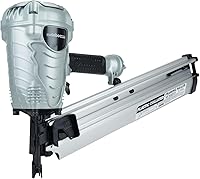
The Metabo HPT NR90AES1 is the pick for most roof decking jobs. It's a 21 degree plastic collated framing nailer that takes 2 to 3-1/2 inch nails.
At 7.5 lb it's light enough to carry up a ladder and move across the roof without tiring you out as fast as a heavier gun. It has selective actuation to switch between sequential and contact firing and a tool-free depth adjustment, which makes it easy to set heads flush.
It runs on air, so you'll need a compressor and hose. Metabo HPT backs it with a 5-year professional warranty.
For a closer look at angled strip guns, see our roundup of best 21 degree framing nailers.
Who should choose the NuMax air framing nailer?
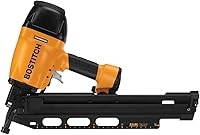
The NuMax SFR2190 suits a buyer who wants a low-cost air framing nailer for framing and roof decking. It takes 21 degree plastic collated full round head nails from 2 to 3-1/2 inches long and 0.113 to 0.131 inch diameter.
Its anti-dry-fire mechanism stops empty fires and reduces wear on internal parts. The dual mode trigger switches between sequential and bump firing, and the depth wheel adjusts by hand.
It weighs 8.6 lb and has a comfort grip handle plus a 360 degree adjustable exhaust. It's pneumatic, so a compressor is required.
The no mar safety tip helps protect visible decking.
Who should choose the Craftsman cordless framing nailer?
The Craftsman V20 CMCN621PL fits roof work where running a hose up a ladder is a hassle. It's a 20 volt cordless 21 degree framing nailer that drives up to 3-1/4 inch round head nails.
The cordless design removes the compressor, the hose and the gas cartridges from the job. Tool-free depth adjustment keeps heads sitting where you want them in the decking.
It has a rafter hook to hang the gun on the framing while you set a panel. The battery and charger are sold separately.
It weighs 10.75 lb, so it's the heaviest of these three, but it's the only one without an air line.
What are the common mistakes when nailing roof sheathing?
The most common mistakes are overdriving the nails, using the wrong nail length and bump firing on a slope. Each one costs time or weakens the deck.
Overdriving leaves less wood holding the panel to the rafter. Set the depth on scrap and check the first few nails as you move across the roof.
A flush or very slightly countersunk head is the goal.
The second is a nail too short or too long for the sheathing and rafter depth. A short nail won't bite enough rafter; a long one can pass through and poke out the underside.
Stay within the tool's stated range.
The third is bump firing on a pitched surface. The gun can bounce and drive a second nail before you've moved.
Sequential fire gives you one nail per deliberate trigger pull. Also keep the gun clear of your body and feet as you work along the deck.
Can you use a cordless framing nailer up on the roof?
Yes, a cordless framing nailer works well on a roof because it removes the hose that snags on rafters and vents. A cordless gun also removes the compressor trip down and up the ladder.
The trade-off is weight and battery life. Cordless framing guns tend to be heavier than air models and the battery adds more.
You also need charged packs and a safe way to keep them dry.
For a small roof repair or a short decking job, cordless is the easier setup. For a full roof on a new build with a big area to cover, a light air framing nailer on a hose often wins on weight and steady power.
Our 21 degree framing nailer comparison covers the cordless and air options side by side.
Does a framing nailer replace a hammer for roof sheathing?
A framing nailer replaces the hammer for most of the sheathing work. It sets full round head nails faster and more consistently than hand nailing, and you won't spend the day swinging over your head.
Keep the hammer for edges, tight corners and places where the gun's nose won't fit. Also keep it for correcting a proud nail or tapping a panel into line before you fasten it.
What the framing nailer won't do is attach shingles. Shingles need roofing nails with wide heads driven by a roofing nailer.
A framing nail's small head would pull through the shingle tab. Plan the decking with the framing gun and bring the roofing gun for the shingle layer.
Is a brad nailer ever an option for roof work?
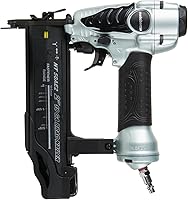
No, a brad nailer is not the right tool for roof decking. Brads are thin finishing nails for trim and light assembly.
They have far too little holding power for sheathing over rafters, and their small heads can pull through the panel. If you're wondering whether a lighter gun could stand in, the answer is no.
Read why in can I use a brad nailer for roofing.
The gauge question comes up when people confuse framing and trim work. A framing nailer drives thick structural nails; a trim nailer drives 15 or 16 gauge finishing nails.
If you're sorting out trim tools for the finished roof edges and fascia, our guide to what gauge nailer for trim explains the difference. Keep the two jobs and the two tools separate and you'll get a solid deck and clean trim.
The bottom line on framing nailers for roofing
Can you use a framing nailer for roofing? Yes, for the framing and sheathing stages, with a 21 degree plastic collated gun, full round head nails long enough for the sheathing and rafter, and a depth setting that leaves heads flush.
Leave shingles to a roofing nailer.
Pick the Metabo HPT NR90AES1 for a light 7.5 lb air gun for most decking jobs. Choose the NuMax SFR2190 for a budget air option with a no mar tip and dual mode trigger.
Go with the Craftsman V20 CMCN621PL when a cordless setup beats dragging a hose up a ladder. Set the depth on scrap first and keep the trigger in sequential mode on the slope.
Frequently asked questions
What nails should you use in a framing nailer for roof decking?
Use 21 degree plastic collated full round head framing nails long enough to go through the sheathing and into the rafter. Nail length and diameter must match the nailer's stated range, so check the tool's limits before you load a coil or strip.
Is a framing nailer safe on a roof?
It's safe when you follow the tool's safety rules. Keep the trigger set to sequential fire, keep your hands clear of the nose, and wear eye protection.
A light nailer with a rafter hook and balanced weight is easier to handle on a slope.
What is the difference between 21 degree and 30 degree framing nailers for roofing?
The nail strip angle has to match the tool. A 21 degree plastic collated framing nailer takes 21 degree nails and is a common choice for framing and sheathing work.
A 30 degree nailer takes its own angled strip and won't fire 21 degree nails.