What Nail Gun for Shiplap
For most shiplap walls, use an 18-gauge brad nailer with nails long enough to pass through the board and hold in the wall framing. A 16-gauge finish nailer can suit thicker boards or a project that calls for a larger fastener.
On this page (7 sections)
- What nail gun works best for shiplap?
- How long should shiplap nails be?
- Should you nail shiplap through the face or tongue?
- When is a 16-gauge finish nailer a better fit?
- Is a cordless brad nailer useful for shiplap?
- How should you set up a nailer for shiplap?
- Which nail gun should you choose for shiplap?
For most shiplap walls, an 18-gauge brad nailer is a practical choice because its small nails leave less visible holes than a finish nailer. Choose nail length based on the board thickness and the wall beneath it, and aim to fasten into framing where the installation calls for it.
The right tool depends on the board material, thickness, and installation instructions. Before starting, check the shiplap maker's guidance for fastener type, spacing, and whether the boards should be nailed through the face or at the tongue.
What nail gun works best for shiplap?
An 18-gauge brad nailer works for many shiplap projects with thinner boards and a finished appearance. Its smaller fasteners can leave neater holes to fill, but they still need to hold the board securely.
A 16-gauge finish nailer drives a thicker nail. It may make sense for thicker boards or when the project instructions specify a larger fastener, though the holes are more visible.
For either tool, match the nail to the board and the surface behind it. A nail that is too short may not reach framing; one that is too long can pass through the material or hit something behind the wall.
If you’re comparing tool types, our guide to types of nail guns explains where brad and finish nailers fit. The trim nailers guide covers the broader tool category.
How long should shiplap nails be?
Choose a nail that passes through the shiplap and reaches the intended backing or framing without extending too far beyond it. The right length depends on board thickness and how the wall is built, so measure the layers and follow the installation instructions.
Don’t pick a nail based only on the tool’s maximum capacity. A nailer may accept several lengths, but that doesn’t mean every length suits your wall.
Test the setup on an offcut or an inconspicuous area. Adjust the nailer’s depth so the fastener sits as intended, then check that the board is held firmly without damage.
Should you nail shiplap through the face or tongue?
Follow the board maker’s installation instructions for the correct fastening method. Some boards are designed for concealed fastening at the tongue; others may require face nailing or a different method.
When nailing through the face, place fasteners consistently and take care not to split the board. When fastening at the tongue, angle and placement matter, so practice on a scrap piece before working on the wall.
Mark the framing locations before installation if the instructions call for fastening into studs. A stud finder can help locate framing, but confirm marks against the wall layout before driving nails.
Can a brad nailer hold shiplap?
A brad nailer can hold shiplap when its nail size and length match the board and the installation plan. Don’t assume a smaller fastener is suitable for every board or wall; use the specified fastener when the manufacturer provides one.
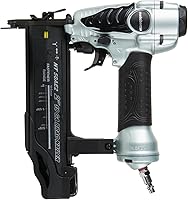
The Metabo HPT NT50AE2 accepts 18-gauge brad nails from 5/8 in to 2 in and has tool-less depth adjustment.
This pneumatic nailer needs an air compressor and hose. Choose it if you already have compatible air equipment and want an 18-gauge tool; compare it with a battery-powered option if you want to avoid the hose.
For more on where this fastener type fits, read what a brad nailer is used for.
When is a 16-gauge finish nailer a better fit?
A 16-gauge finish nailer can be a better fit when thicker boards or project instructions call for a larger nail. Its fasteners leave larger holes than 18-gauge brads, so plan for filling and finishing if those holes will show.
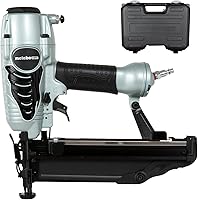
The Metabo HPT NT65M2S accepts 16-gauge finish nails from 1 in to 2-1/2 in and has tool-free depth adjustment.
This is a pneumatic tool, so you’ll need compatible air equipment. Check that its fastener range suits your materials before choosing it.
The guide to using a finish nailer for trim covers basic setup and placement. Follow your shiplap instructions for the wall installation itself.
Is a cordless brad nailer useful for shiplap?
A cordless brad nailer can be useful if you want to work without a compressor and hose. Confirm that the model’s nail range and fastening method match your shiplap before choosing it.
The DeWalt DCN680B is a battery-powered 18-gauge brad nailer that accepts nails from 5/8 in to 2-1/8 in. It has tool-free depth adjustment and a low-nail lockout feature.
The tool is sold without a battery in the supplied product name, so account for a compatible battery if you don’t already have one. Its 18-gauge size makes it a candidate for projects calling for brads, not a substitute for specified 16-gauge fasteners.
How should you set up a nailer for shiplap?
Set the nailer depth on scrap material before fastening the wall boards. The nail should sit as the installation requires without crushing the board or leaving a proud head.
Wear eye protection and keep your hands clear of the nose and the line of fire. OSHA’s nail gun safety guidance covers safe handling practices, including trigger choice and work positioning.
Disconnect a pneumatic nailer from its air supply before clearing a jam or making adjustments. For any tool, follow its manual for loading, jam clearing, and maintenance.
Which nail gun should you choose for shiplap?
Choose an 18-gauge brad nailer for shiplap that calls for brads and suits the nailer’s length range. Choose a 16-gauge finish nailer when the board or installation instructions call for a larger fastener.
The Metabo HPT NT50AE2 is a pneumatic brad option, while the DeWalt DCN680B is a cordless brad option. The Metabo HPT NT65M2S is the 16-gauge choice here for projects that need finish nails.
Before buying, check the board thickness, fastening method, framing, and nail length required for your wall. For another tool comparison, see what gauge nailer to use for trim.