Types of Nail Guns: A Plain Guide for Home Projects
The main types of nail guns are brad, finish, framing and pin nailers. Match the tool to the size and holding strength your project needs, then check whether a pneumatic or cordless setup suits your workspace.
On this page (8 sections)
- What are the main types of nail guns?
- How does nail gauge affect the choice?
- What is the difference between pneumatic and cordless nail guns?
- Which nail gun fits common home projects?
- Four nail guns for different home projects
- What should you check before choosing a nail gun?
- Which nail gun should you choose?
- More nail gun guides
The main types of nail guns for home projects are brad, finish, framing and pin nailers. Match the fastener to the work: small brads and pins suit detail jobs, finish nails suit trim, and framing nails suit larger wood assemblies.
The tool name alone doesn't tell you whether it fits. Check the material, joint, fastener length and access to power before choosing.
What are the main types of nail guns?
The main types differ by fastener size and intended work. Brad, finish and pin nailers are common around trim and detail work, while framing nailers handle larger construction fasteners.
| Type | Common fit | Fastener to check |
|---|---|---|
| Brad nailer | Trim, furniture building and finishing work | Brad gauge and length |
| Finish nailer | Molding, chair rail and cabinetry | Finish nail gauge and length |
| Framing nailer | Framing, decking and other wood assemblies | Nail length and collation angle |
| Pin nailer | Small molding, paneling, crafts and picture frames | Pin gauge and length |
These are starting points, not a substitute for matching the nail to your materials and plans. A nail that's too long can emerge through the other side, while one that's too short may not hold the pieces as intended.
Some tools also differ in how they fire and adjust depth. Check the manual for the tool's operating modes, compatible fasteners and safety instructions.
Which types of nail guns are best for trim?
A brad or finish nailer is usually the place to start for trim. Choose the one that accepts a fastener suited to the thickness and appearance of the pieces you're joining.
An 18-gauge brad is thinner than a 16-gauge finish nail. A brad nailer can suit narrower trim and furniture work, while a finish nailer can fit heavier molding and other fine finish jobs.
Neither tool is right for every trim installation. Check the trim maker's fastening recommendations and use the appropriate nail length for the material and backing.
Which type is made for framing?
A framing nailer is made for larger framing fasteners and wood construction work. It can suit jobs such as wall sheathing, trusses, subflooring and roof decking when the fastener matches the plans.
Framing nailers are larger tools than detail nailers, and their nails are not a substitute for small finish fasteners. Don't use one on delicate trim where a large nail could split or damage the work.
What does a pin nailer do?
A pin nailer drives very small, usually headless pins for delicate trim and craft work. It can help hold small pieces in place where a larger fastener would leave a more visible hole.
Pins may not provide the holding strength needed for every joint. Consider whether the piece needs a stronger fastener, and follow the adhesive or project instructions when they call for one.
How does nail gauge affect the choice?
Gauge is a way to describe fastener thickness, and a lower gauge number generally means a thicker nail. For example, a 16-gauge finish nail is thicker than an 18-gauge brad, while a 23-gauge pin is much smaller.
Thicker nails may leave larger holes and can split narrow stock. Smaller fasteners leave smaller holes, but their size may not suit a joint that needs more holding strength.
| Fastener type | Example gauge | Think about it for |
|---|---|---|
| Brad nail | 18 gauge | Narrow trim and finishing work |
| Finish nail | 16 gauge | Molding, chair rail and cabinetry |
| Pin | 23 gauge | Small molding, crafts and picture frames |
| Framing nail | Varies by fastener | Wood framing and construction assemblies |
Gauge alone is not enough to choose a nail. Check fastener length, material thickness, the angle of the joint and the instructions for your project.
If you're deciding between two trim tools, see our 16 gauge vs 18 gauge nailer guide and what gauge nailer for trim guide.
What is the difference between pneumatic and cordless nail guns?
A pneumatic nail gun runs on compressed air, usually from a compressor connected by a hose. A cordless nail gun works without that air line, but its power source and operating requirements depend on the specific model.
Pneumatic tools can make sense if you already have a compatible compressor, hose and fittings. Add the compressor and hose to your setup when considering the tool, since they affect where you can work and what you need to carry.
Cordless tools can make setup simpler in places without convenient compressor access. Check whether a specific nailer needs a battery, what fasteners it accepts and what accessories come with it.
Don't assume that every nailer in a product family uses the same power source. Read the tool's details and manual before buying compatible fasteners or batteries.
For one cordless example, our best cordless nail guns guide compares options for homeowners. If you're considering a brad nailer without an air compressor, see cordless brad nailer options.
Which nail gun fits common home projects?
Choose the tool by the material and fastener your project needs, not just by the job name. A project labeled “trim” could call for a brad nailer, a finish nailer or a pin nailer, depending on the pieces and joint.
Baseboards, molding and chair rail
A brad nailer can suit lighter trim, while a finish nailer can suit heavier molding or chair rail. Check the trim thickness, the backing behind it and the fastener guidance before you start.
For help with the nail length, read what size nails for baseboard trim is intended to clarify, and see how to use a finish nailer for a tool-specific walkthrough.
Cabinets, paneling and small moldings
A brad, finish or pin nailer may fit, depending on the size and strength the joint needs. A pin nailer can suit small moldings or delicate pieces, while a brad or finish nailer uses a larger fastener.
For projects that use small brads, our guide explains what a brad nailer is used for around the house. If the work involves wall boards, see what nail gun works for shiplap.
Fences, decks and sheds
A framing nailer may suit construction work with larger wood fasteners, but the project plan and material determine the nail and tool. Check fastener requirements before using a nailer on a fence, deck or shed.
Our guides explain how to use a framing nailer and what size nail gun you need for fencing. For a specific framing nailer angle, compare 21 vs 30 degree framing nailers.
Small repairs and occasional DIY jobs
For a small repair, first decide whether you need a nail gun at all. A hammer and suitable nails may be simpler when the job is brief, the material is delicate or you need only a few fasteners.
If a nailer would help, match its fastener to the work and check the space around the joint. Our guide to choosing a nail gun for a DIY project offers another way to narrow the options.
Four nail guns for different home projects
These four tools represent different fastener types, from brads and finish nails to framing nails and headless pins. Choose by the work you expect to do and confirm that the tool's fasteners and power setup suit your project.
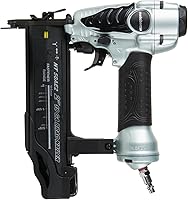
Metabo HPT NT50AE2: 18-gauge brad nailer
This pneumatic brad nailer accepts 18-gauge nails from 5/8 in to 2 in. Metabo HPT describes it for trim work, furniture building and other finishing applications.
Its selective actuation switch offers bump fire or sequential fire modes. It also has a no-mar tip, an adjustable exhaust and a reload indicator.
Consider this type for smaller finishing fasteners. Make sure a brad is suitable for the pieces and joint before using it.
For more detail on the tool category, read what a brad nailer is used for or browse our brad nailer picks.
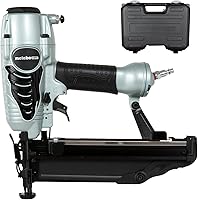
Metabo HPT NT65M2S: 16-gauge finish nailer
This pneumatic finish nailer accepts 16-gauge nails from 1 in to 2-1/2 in. Its stated applications include molding, chair rail, cabinetry and other fine finish work.
The tool includes a selective actuation switch, an adjustable exhaust and an air duster button. Those features are separate from the decision about which nail size your trim needs.
Consider a finish nailer when the work calls for a larger finish nail than a brad. Compare the fastener size with the material and project instructions before you buy.
See our guide to using a finish nailer for baseboards and trim and the trim nailer category.
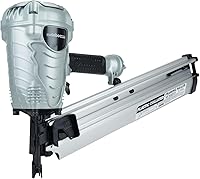
Metabo HPT NR90AES1: 21-degree framing nailer
This pneumatic framing nailer accepts 2 in to 3-1/2 in plastic-collated framing nails. Its stated applications include framing, truss build-up, subflooring, roof decking and wall sheathing.
It weighs 7.5 lb and has tool-less depth adjustment and selective actuation. Check the fastener angle and type required for your project before choosing a compatible nail.
Consider this type for larger construction fasteners, not small trim details. Read our framing nail gun guide for more on the category.
Metabo HPT NP35A: 23-gauge pin nailer
This pneumatic pin nailer uses 23-gauge headless pins in lengths from 5/8 in to 1-3/8 in. Its stated applications include cabinets, paneling, small molding, crafts and picture frames.
The tool has a depth adjustment, dual trigger, rear exhaust and no-mar tip. These features support careful placement, but a small pin isn't suitable for every joint.
Consider a pin nailer when a small headless fastener suits the work. Choose another fastener if the piece needs more holding strength.
For other small-fastener options, see our best 23-gauge pin nailers guide.
What should you check before choosing a nail gun?
Before buying, confirm the fastener, power source and working space. Those three checks can prevent a mismatch between the tool and your project.
- Identify the joint and materials. Check the project plans, material guidance or trim instructions for the required fastener.
- Confirm fastener compatibility. Match the nail gauge, length, collation and angle to the tool.
- Choose the power setup. Decide whether a compressor and hose fit your workspace or whether cordless operation suits it better.
- Check access. Consider whether the tool can reach the joint without striking nearby walls, glass or finished surfaces.
- Read the manual. Check loading, depth adjustment, operating modes and jam-clearing instructions for that exact tool.
- Plan for safety. Wear eye protection, keep your hands away from the firing area and follow the tool maker's instructions.
A nailer's depth adjustment can help set how far a fastener drives, but it doesn't replace a test on scrap material. Use offcuts that match your work when the manual allows, and adjust carefully before fastening the finished piece.
For general safety guidance, review OSHA's nail gun safety page. For help with a common problem, read how to clear a jammed nail gun safely and our nail gun safety tips.
Which nail gun should you choose?
Choose a brad nailer for smaller finishing nails, a finish nailer for larger trim fasteners, a framing nailer for construction nails, or a pin nailer for very small headless pins. Then confirm that the specific fastener and power source fit your project.
If you still aren't sure, start with what nail gun you need for your project. For focused comparisons, see finish nailer vs framing nailer, angled vs straight finish nailer, and brad nailer vs crown stapler.
More nail gun guides
Use these guides to explore tool categories, project steps and specific comparisons:
- Brad nailers: Brad nailer picks, best brad nailers, how to load a brad nailer, and brad nailer vs crown stapler.
- Finish and trim nailers: trim nailers, best nail guns for trim, best nailers for crown molding, best 16-gauge finish nailers, and 16 gauge vs 18 gauge nailer.
- Framing nailers: framing nail guns, best 21-degree framing nailers, and framing nailer angles explained.
- Tool matchups and reviews: DeWalt vs Ryobi brad nailer, DeWalt vs Milwaukee finish nailer, Ryobi P322 review, and Metabo HPT NT65M2S review.
- Project and buying help: brad nailer without a compressor, best cordless nail guns, best nail guns for DIY projects, nail gun for fencing, and nail gun for shiplap.
- Safety and troubleshooting: nail gun safety tips and how to clear a jammed nail gun.
- Other project basics: nail size for baseboard trim and what gauge nailer to use for trim.
Frequently asked questions
What are the main types of nail guns?
The main types for home projects are brad nailers, finish nailers, framing nailers and pin nailers. Brad and finish nailers suit trim and detail work, framing nailers drive larger nails into structural assemblies, and pin nailers place very small headless fasteners in delicate trim or crafts.
Can one nail gun do every home project?
No single nail gun is a good fit for every material and fastener size. A framing nailer is made for larger framing nails, while a pin nailer uses small headless pins.
Choose based on the joint, material and finish, and use a different tool when the fastener does not match the job.
What is the difference between a brad nailer and a finish nailer?
A brad nailer uses thinner 18-gauge brads and is commonly suited to trim and other finishing work where smaller holes help. A finish nailer uses thicker finish nails, often 15- or 16-gauge, for applications such as molding and cabinetry that need a different fastener.
Should I choose a pneumatic or cordless nail gun?
Choose pneumatic if you already have a compatible air compressor and hose, or if you want a tool that uses that setup. Choose cordless when working without an air line matters more, while checking the specific tool's power source, battery needs and fasteners before buying.
Are nail guns safe for beginners?
A beginner can use a nail gun more safely by reading the tool manual, wearing eye protection, keeping hands clear of the nose and disconnecting the power source before clearing a jam or loading. Follow the tool maker's instructions and review OSHA's nail gun safety guidance before starting.