21 vs 30 Degree Framing Nailer: What Changes? (November 2026)
Choose by the nail collation and tool setup you need: 21 degree models use plastic collated nails, while this 30 degree model uses paper collated nails. The magazine angle can also affect access in tight spots.
On this page (8 sections)
- 21 vs 30 degree framing nailer: what changes?
- Which nailer works with the nails you can get?
- Which angle is better for a framing project?
- Does a 30 degree nailer fit better in tight corners?
- Does angle affect weight or power source?
- How do you avoid buying the wrong nails?
- Which 21 vs 30 degree framing nailer should you choose?
- Related reading
Choose a 21 degree framing nailer for plastic collated nails, or a 30 degree model for paper collated nails and a more angled magazine. The right choice depends on the fasteners available for your job, the space around your work and whether you want pneumatic or cordless power.
Degree numbers describe the magazine angle and help identify compatible fasteners. They don't tell you which nailer is more powerful or suitable for every framing job.
The Metabo HPT NR90AES1 is a 21 degree pneumatic nailer that accepts 2–3-1/2 in plastic collated nails. The NR90ADS1 is a 30 degree pneumatic model for 2–3–1/2 in paper collated clipped and offset round head nails.
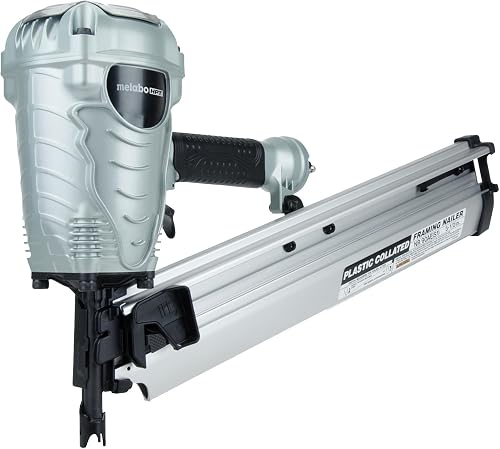 Best for lighter pneumatic work
Metabo HPT NR90AES1 21 Degree Framing Nailer
 Best for tight corner access
Metabo HPT NR90ADS1 30 Degree Framing Nailer
21 vs 30 degree framing nailer: what changes?
The magazine angle and nail collation change; the basic framing tasks can overlap. Both Metabo HPT models cover framing, flooring, truss work, window build-up, subflooring, roof decking, wall sheathing and housing construction.
The 21 degree NR90AES1 uses plastic collated nails. The 30 degree NR90ADS1 uses paper collated nails, and its maker says the angled magazine helps with work in tight corners.
Both accept nails from 2 to 3-1/2 in and include tool-less depth adjustment. Each also lets you switch between sequential and contact nailing with selective actuation.
What does the angle mean for nail access?
The 30 degree magazine sits at a sharper angle than a 21 degree magazine. That shape may make it easier to get the tool into some tight corners, though the nailer's body and your approach angle still affect access.
A 21 degree magazine may suit open framing where the tool can approach the work directly. Check the space around joists, studs and corners before deciding that angle alone will solve a clearance issue.
If you haven't used a framing nailer before, our guide to using a framing nailer covers positioning and basic setup. Follow the manual for the exact tool and fasteners you choose.
What does the angle mean for fasteners?
The collation type matters because the nailer must accept the nails you plan to use. A 21 degree tool that takes plastic collated nails won't automatically take the paper collated nails intended for a 30 degree model.
Check both the degree and the stated nail type on the nailer and fastener packaging. Also confirm nail length and head style, especially if your project calls for a specific fastener.
Which nailer works with the nails you can get?
Choose the tool around compatible fasteners you can reliably source for the job. A good price or familiar brand won't help if the nail type doesn't fit your nailer.
The NR90AES1 accepts 2–3-1/2 in plastic collated framing nails. The NR90ADS1 accepts 2–3-1/2 in paper collated clipped and offset round head nails.
Availability can vary by store and project location. Before buying a nailer, check local hardware suppliers for the lengths and collation type you expect to use, then keep the tool's manual handy.
For a broader overview of tool types and where they fit, see our guide to types of nail guns. For a closer look at the category, visit our framing nail gun guide.
Which angle is better for a framing project?
Neither angle is automatically better for every project; choose by access, fastener supply and tool setup. The two pneumatic Metabo HPT nailers cover many of the same framing and sheathing jobs.
Choose 21 degree for plastic collated nails
The NR90AES1 is the direct fit if your work calls for plastic collated nails from 2 to 3-1/2 in. It weighs 7.5 lb and includes selective actuation and tool-less depth adjustment.
That combination suits a buyer who wants a pneumatic framing nailer with a lighter stated weight than the 30 degree option here. It still requires an air compressor and hose, so plan for that setup.
Choose 30 degree for paper collated nails and angled access
The NR90ADS1 is the fit if your fasteners are paper collated clipped or offset round head nails. Its 30 degree magazine is designed to help with tight corners, and the tool weighs 7 lb.
It has the same 2–3-1/2 in nail length range as the 21 degree Metabo HPT. Choose it when paper collation and access in tighter spaces suit your work.
Choose cordless when you want to skip the compressor
The Craftsman V20 CMCN621PL is a 21 degree cordless framing nailer. It can drive up to 3-1/4 in round head nails, and its battery platform avoids the need for a compressor, hose or gas cartridge.
Its battery and charger are sold separately, so include those in your setup plans if you don't already use the V20 platform. At 10.75 lb, it weighs more than either pneumatic Metabo HPT model listed here.
Does a 30 degree nailer fit better in tight corners?
It can help in some tight corners, but the tool's body still needs room to reach the work. The NR90ADS1's maker describes its 30 degree magazine as a way to facilitate work in tight corners.
Look at the full work area, not only the gap where the nail enters. Nearby pipes, blocking, walls and the shape of the nailer's body can limit your approach even when the magazine angle helps.
If you're framing a fence, compare the fastener needs and access for that job in our guide to choosing a nail gun for fencing. The correct nail length and suitable material matter along with magazine angle.
Does angle affect weight or power source?
Angle alone doesn't determine weight or power source; compare each model's actual setup. The 21 degree NR90AES1 and 30 degree NR90ADS1 are pneumatic, while the Craftsman 21 degree model runs on a battery.
The NR90AES1 weighs 7.5 lb, and the NR90ADS1 weighs 7 lb. Both need an air compressor and hose, which can add bulk around a jobsite.
The Craftsman weighs 10.75 lb and runs on the V20 battery platform. It removes the compressor and hose, but the battery and charger are sold separately.
If you're deciding between pneumatic and battery tools, our nail gun basics guide explains the common power setups. Consider how far you move around the job and what equipment you already own.
How do you avoid buying the wrong nails?
Match the nail angle, collation, length and head style to the exact nailer. Confirm the tool's manual and the fastener packaging before loading it.
For the 21 degree NR90AES1, look for plastic collated framing nails from 2 to 3-1/2 in. For the NR90ADS1, look for paper collated clipped and offset round head nails in the same length range.
The Craftsman accepts 21 degree plastic collated nails and drives round head nails up to 3-1/4 in. Don't use the 3-1/2 in limit from either Metabo HPT model as a guide for the Craftsman.
Load and clear the nailer only according to its manual. Our nail gun safety tips cover safe handling around a work area.
Which 21 vs 30 degree framing nailer should you choose?
Pick 21 degree if plastic collated nails fit your supply, and 30 degree if you need paper collation or more angled access. Choose cordless when avoiding a compressor and hose matters more than keeping tool weight down.
The Metabo HPT NR90AES1 is the 21 degree choice for 2–3-1/2 in plastic collated nails. The NR90ADS1 is the 30 degree option for paper collated clipped and offset round head nails, with a magazine angle intended for tight corners.
For a cordless setup, the Craftsman V20 CMCN621PL takes 21 degree plastic collated nails up to 3-1/4 in. Compare its battery requirements with your existing tools before deciding.
Related reading
- Best 21 degree framing nailers
- Finish nailer vs framing nailer
- How to use a framing nailer
- What size nail gun do you need for fencing?
Frequently asked questions
What is the difference between a 21 and 30 degree framing nailer?
A 21 degree framing nailer uses a steeper magazine angle and commonly takes plastic collated nails, while a 30 degree model uses a more angled magazine and may use paper collated nails. Check the tool's stated fastener type and angle before buying nails, since the degree alone doesn't confirm compatibility.
Are 21 and 30 degree framing nails interchangeable?
No, don't assume they're interchangeable. These Metabo HPT models use different collation types: the 21 degree NR90AES1 takes plastic collated nails, while the 30 degree NR90ADS1 takes paper collated clipped and offset round head nails.
Match the fastener packaging to the exact nailer.
Which framing nailer fits in tight spaces?
A 30 degree framing nailer can be easier to position in a tight corner because its magazine is more angled. The NR90ADS1 is described as having a 30 degree magazine to help in tight corners, but body clearance and your working angle still matter.
Can you use a framing nailer without an air compressor?
Yes. A cordless framing nailer avoids the compressor and hose.
The Craftsman V20 CMCN621PL is battery powered and accepts 21 degree plastic collated nails, but its battery and charger are sold separately.


