DeWalt vs Milwaukee Finish Nailer: DCN660B or 3020? (November 2026)
Choose the DeWalt DCN660B for angled nails and a 20V MAX battery system; choose the Milwaukee 3020-20 for straight nails and an M18 system. Both are cordless 16 gauge finish nailers with depth adjustment and sequential or contact actuation.
On this page (8 sections)
- DeWalt vs Milwaukee finish nailer: what is the main difference?
- Which nailer fits your trim project?
- How do their nail angles affect access?
- What should you know about depth and jam controls?
- Which battery system should you choose?
- Would the DeWalt DCN650B be a better fit?
- How we compared these finish nailers
- DeWalt DCN660B vs Milwaukee 3020-20: which should you buy?
Choose the DeWalt DCN660B for angled nails and a 20V MAX battery system; choose the Milwaukee 3020-20 for straight nails and Milwaukee M18 batteries. Both are cordless 16 gauge finish nailers with depth adjustment and selectable trigger modes.
The biggest difference is the fastener setup. The DeWalt drives angled 16 gauge nails, while Milwaukee's 3020-20 is made for straight 16 gauge nails.
Your battery platform is the next deciding factor. If you already have compatible batteries, staying with that system may make the tool choice simpler.
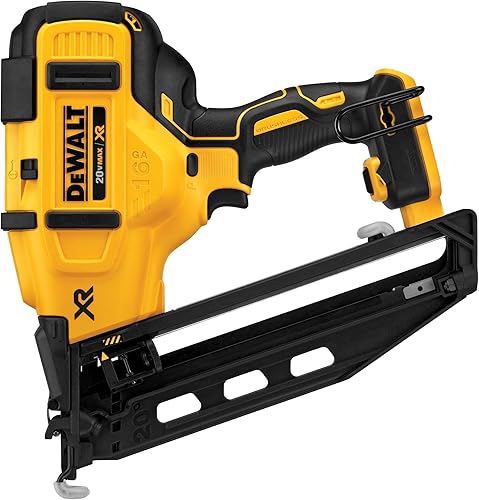 Best for angled trim work
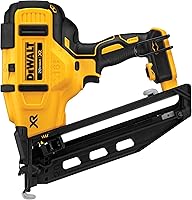
DeWalt DCN660B 20V 16 Ga Angled Finish Nailer
 Best for straight nails
Milwaukee 3020-20 M18 FUEL 16 Ga Finish Nailer
DeWalt vs Milwaukee finish nailer: what is the main difference?
The DCN660B has an angled magazine; the Milwaukee 3020-20 has a straight magazine. Both use 16 gauge finish nails, but their nail strips aren't interchangeable just because the gauge matches.
The DeWalt works with DeWalt 20V MAX batteries. Milwaukee's 3020-20 belongs to the M18 system and is designed for straight 16 gauge nails from 1 to 2 1/2 inches.
That angle affects the spaces each tool can reach and which fasteners you need to keep on hand. Check the nail angle and length specified for the exact tool before stocking up.
For a wider view of finish nailers and other common tools, see types of nail guns. If you're still deciding which tool category suits your job, what nail gun do I need? walks through the project choice.
Which nailer fits your trim project?
Pick the nailer that matches your trim, fasteners and working angle. Neither model is the automatic choice for every baseboard, casing or molding job.
A finish nailer is used for trim where a narrower nail head and a neat finish matter. The right gauge and length depend on the material, joint and guidance for the project.
When does the DeWalt DCN660B make sense?
The DCN660B is a strong fit if you prefer an angled magazine or already use DeWalt 20V MAX batteries. DeWalt says its inline magazine supports use in multiple orientations and tight spaces.
Its tool-free depth adjustment helps you set how far nails countersink. It also has a tool-free jam release and a stall release lever to reset the driver blade if it stalls.
The selectable trigger supports sequential or contact actuation. Its LED lights provide workspace illumination and tool diagnostics.
The DCN660B is sold as a tool-only option. If you don't already have a compatible battery, include the battery and charger in your setup plan.
When does the Milwaukee 3020-20 make sense?
Choose the 3020-20 if you need a straight 16 gauge nailer and use Milwaukee M18 batteries. It has a 110 nail magazine capacity and supports sequential and contact actuation.
Milwaukee describes it as capable of firing 3 nails per second and up to 700 nails per charge with an M18 CP2.0 battery. Those figures are manufacturer claims, so your results can vary with the work and battery condition.
The tool has a work light, a reversible belt hook and tip storage on the magazine. Tool-free depth adjustment and a jam-clearing latch are also included.
It is a tool-only option. Confirm you have the battery and charger you need before planning a job around it.
How do their nail angles affect access?
An angled magazine can help when you approach trim from a tight or awkward position; a straight magazine may suit open, direct access. The best shape depends on the wall, corner and trim piece.
The DCN660B's angled design can make it easier to place the nose near a corner or along a narrow edge. Its inline magazine is intended for use in different orientations.
The Milwaukee 3020-20's straight magazine has a more direct profile. If you have open access along a wall or baseboard, that shape may work well for your approach.
Neither angle guarantees that the tool will fit every spot. Before you buy, consider nearby cabinets, floors, door casings and how much room you have to hold the tool level.
For more on angle and access, read angled vs straight finish nailers. That guide explains which format makes sense for your trim and work area.
What should you know about depth and jam controls?
Both nailers have tool-free depth adjustment and a way to clear jams. Those features let you make common setup changes without reaching for a separate adjustment tool.
On the DCN660B, the depth control is tool-free and designed for precise countersinking. The jam release is also tool-free, and the separate stall release lever can reset the driver blade after a stall.
The Milwaukee 3020-20 also offers tool-free depth adjustment and a jam-clearing latch. Its description lists both sequential and contact actuation modes.
Depth settings still need to suit the material and fastener. Follow the tool manual and test on scrap from the same material before moving to visible trim.
If a nailer stops feeding, disconnect its battery before following the manual's jam-clearing steps. See how to clear a jammed nail gun safely for general precautions and a careful process.
Which battery system should you choose?
Choose the battery platform you already own, unless the nail angle or fastener requirements point clearly to the other tool. The DCN660B uses DeWalt 20V MAX batteries, while the Milwaukee is part of the M18 system.
The DCN660B is compatible with all DeWalt 20V MAX batteries. The Milwaukee 3020-20 works within Milwaukee's M18 system; its stated 700-nail figure is tied to an M18 CP2.0 battery.
Neither product name means a battery and charger are included. Check your kit contents and battery compatibility, particularly if you're buying your first cordless tool in either system.
A shared battery system can reduce the number of chargers and battery types you keep around. It can also make the choice straightforward if your workshop already leans toward one brand.
Would the DeWalt DCN650B be a better fit?
Consider the DeWalt DCN650B if you need an angled 15 gauge finish nailer instead of a 16 gauge model. It's an alternative for projects that call for that larger gauge, not a direct replacement for every use.
The DCN650B runs on DeWalt 20V MAX batteries and has an angled magazine. It also includes tool-free depth adjustment, a jam release and selectable sequential or contact actuation.
Its micro nose is designed to improve line of sight and nail placement accuracy compared with the DeWalt DC628. DeWalt describes it for crown molding, casing, baseboards and hardwood floor installation.
Don't choose a 15 gauge tool only because it shares the brand and battery platform. Confirm the fastener size suits the trim and materials you're joining.
For general trim guidance, start with how to use a finish nailer. You can also compare finish nailers and framing nailers if you're weighing a trim tool against a heavier framing job.
How we compared these finish nailers
We compared the listed features, nail format and battery compatibility against the needs of finish-nailer shoppers. Our scores weigh specs and features against the searcher's likely project needs.
The DCN660B scores 8.9 because it combines an angled 16 gauge format with broad compatibility across DeWalt 20V MAX batteries, plus tool-free depth and jam controls. The Milwaukee 3020-20 scores 8.6 for its straight nail format, M18 system, 110 nail magazine and similar adjustment controls.
The DCN650B scores 8.8 as a useful adjacent choice for a 15 gauge angled fastener. Its score reflects that it can be a better match for some trim, while differing from the 16 gauge comparison.
These scores are editorial judgments based on the supplied product facts and the search intent. They aren't a promise that one tool will suit every trim or worksite.
DeWalt DCN660B vs Milwaukee 3020-20: which should you buy?
Pick the DCN660B if you want angled 16 gauge nails and use DeWalt 20V MAX batteries; pick the 3020-20 if you need straight 16 gauge nails and use Milwaukee M18. The battery platform and compatible nail angle are the clearest decision points.
Choose the DeWalt DCN650B when your project calls for 15 gauge angled nails. Before buying any of the 3, confirm the fastener gauge, angle and length for your trim.
If you need help narrowing down the tool category, use our finish nailer guide. It can help you match a finish nailer to the work before you choose a brand.
DeWalt vs Milwaukee finish nailer quick comparison
| Product | Best for | Gauge | Magazine angle | Battery system | Our score |
|---|---|---|---|---|---|
| DeWalt DCN660B 20V 16 Ga Angled Finish Nailer | angled trim work | 16 gauge | Angled | DeWalt 20V MAX | 8.9 |
| Milwaukee 3020-20 M18 FUEL 16 Ga Finish Nailer | straight nails | 16 gauge | Straight | Milwaukee M18 | 8.6 |
| DeWalt DCN650B 20V 15 Ga Angled Finish Nailer | larger 15 gauge nails | 15 gauge | Angled | DeWalt 20V MAX | 8.8 |
See the DeWalt DCN660B if angled 16 gauge nails fit your job. For straight nails and Milwaukee M18 compatibility, compare the Milwaukee 3020-20 with the DeWalt DCN650B if you need 15 gauge angled fasteners.
Read the nail-gun safety tips before using a finish nailer, and follow the manual for the exact model.
Frequently asked questions
Is the DeWalt DCN660B better than the Milwaukee 3020-20?
The DCN660B is a better fit if you need an angled 16 gauge nailer and use DeWalt 20V MAX batteries. The Milwaukee 3020-20 fits straight nails and the M18 system.
Both have tool-free depth adjustment and selectable sequential or contact actuation, so choose by nail angle and battery platform.
Do the DeWalt DCN660B and Milwaukee 3020-20 use the same nails?
No. The DeWalt DCN660B is an angled 16 gauge nailer, while the Milwaukee 3020-20 takes straight 16 gauge finish nails from 1 to 2 1/2 inches.
Check the nail angle and length before buying fasteners, since sharing a gauge doesn't make the strips interchangeable.
Can either finish nailer work without a compressor?
Yes. Both are cordless battery-powered nailers, so neither needs a compressor, hose or gas cartridge.
The DeWalt uses its 20V MAX battery system, and the Milwaukee is part of the M18 system.
The tools are sold as tool-only options, so plan for a compatible battery and charger.
Should I choose a 15 or 16 gauge finish nailer?
Choose based on the fastener your trim job calls for and the nailer's compatible angle and length. The DCN660B and Milwaukee 3020-20 are 16 gauge options; the DeWalt DCN650B is a 15 gauge angled alternative.
For a broader comparison, see our guide to 16 gauge vs 18 gauge nailers.
Which nailer is easier to use in tight spaces?
The DeWalt DCN660B has an angled magazine, which can help with access in tight spaces and different orientations. The Milwaukee 3020-20 has a straight magazine.
Measure the working area and consider the direction you'll approach the trim before choosing.